
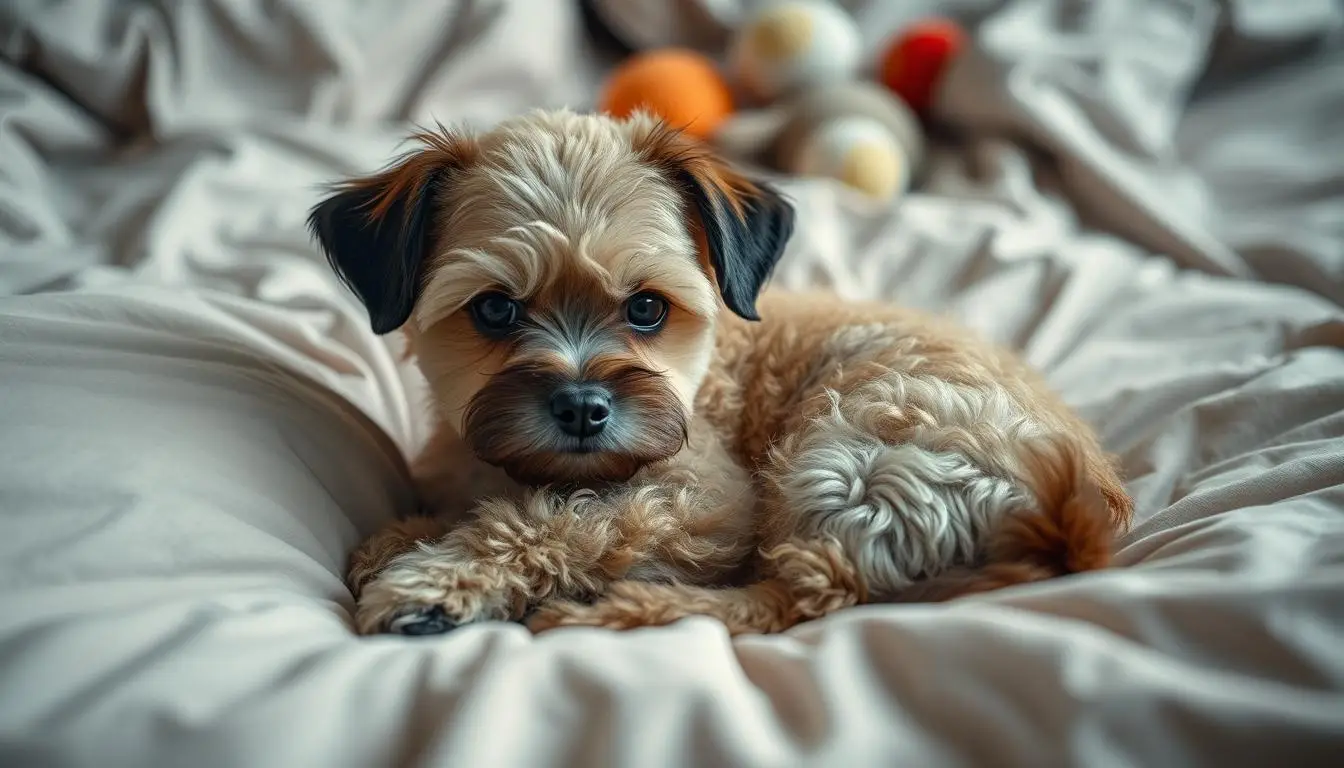
Did you know up to 40% of dogs suffer from separation anxiety? This is common in small dog breeds, causing stress for pets and owners. If your small dog gets anxious when alone, it’s key to know why and how to help.
Small dogs with separation anxiety might bark a lot, chew things they shouldn’t, or go to the bathroom where they shouldn’t. These behaviors are not just naughty; they show a dog is really upset. By spotting these signs and using calming methods and training, you can ease your dog’s anxiety and make their life better.
In this article, we’ll look at why small dogs get anxious when left alone and how to fix it. We’ll cover making a calm space, using training, and when to get professional help. With time, effort, and the right steps, you can help your small dog feel better and grow closer to them.
Key Takeaways
- Understand the signs and causes of separation anxiety in small dogs
- Create a calm environment with safe spaces and soothing elements
- Implement gradual desensitization and counterconditioning techniques
- Utilize crate training to provide a secure retreat
- Offer mental stimulation and physical exercise to reduce anxiety
- Build your dog’s confidence through socialization and training
- Consider professional help from a dog trainer or behaviorist for severe cases
Understanding Separation Anxiety in Small Dogs
Many small dog owners face the challenge of separation anxiety. Anxious small dogs may show distressing behaviors when left alone. Knowing the signs and causes can help you support your dog and make them feel secure when you’re away.
Common Signs of Separation Anxiety
Small dogs with separation anxiety may show various symptoms. These include:
- Excessive barking, whining, or howling
- Destructive behavior, such as chewing or digging
- House soiling, even if previously housetrained
- Pacing or restlessness
- Attempts to escape or follow you as you leave
- Drooling, panting, or other signs of distress
These symptoms can be hard for both the dog and the owner. They may get worse if not addressed.
Causes of Separation Anxiety in Small Dogs
Several factors can lead to separation anxiety in small dogs. These include:
- Changes in routine or environment, such as moving to a new home or a change in work schedule
- Lack of early socialization and training, leading to insecurity and fear of being alone
- Traumatic experiences, such as abandonment or loss of a family member
- Genetic predisposition, as some breeds may be more prone to anxiety
Identifying the causes of your small dog’s separation anxiety is key. It helps address the problem and makes them feel secure when alone.
Creating a Calm Environment for Your Small Dog
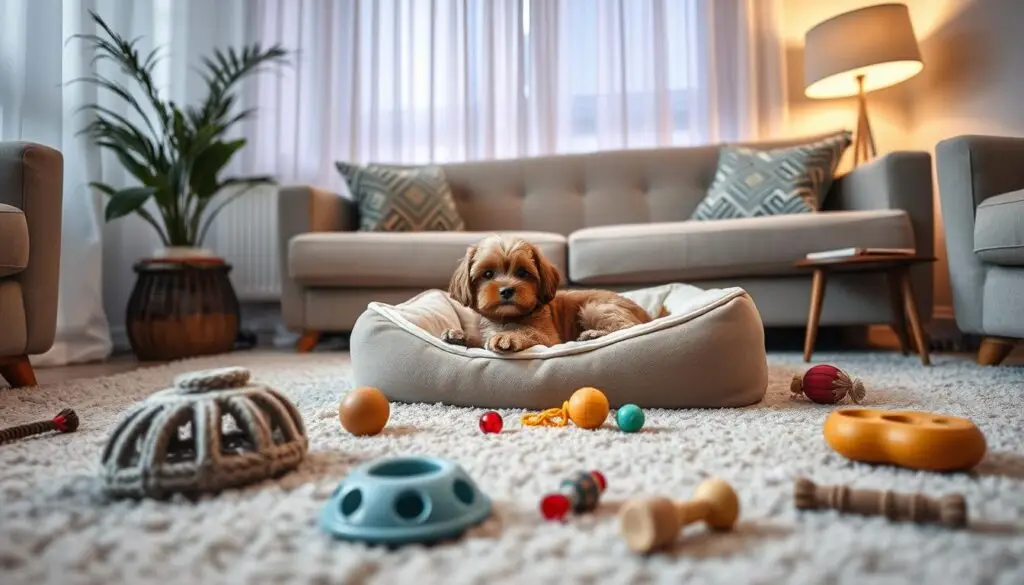
Creating a calm space is key for your small dog’s separation anxiety. A safe area with soothing elements can lower stress when you’re away.
Establishing a Safe Space
Choose a cozy spot in your home for your dog’s safe space. It could be a quiet room or a corner with a soft bed. Make it inviting with treats and praise to link it to good times.
Using Calming Pheromone Products
Pheromone products, like diffusers or collars, can calm your dog. They mimic a mother dog’s pheromones, soothing anxious dogs. Some top picks include:
| Product | Description |
|---|---|
| Adaptil Diffuser | Plugs into an electrical outlet and releases calming pheromones into the air |
| ThunderEase Calming Collar | A collar infused with pheromones that your dog wears around their neck |
| Sentry Calming Collar | Another pheromone-infused collar that helps reduce anxiety and stress |
Playing Soothing Music or White Noise
Sound is important for a calm environment. Soft music or white noise can block out noises that cause anxiety. Look for dog-friendly playlists on Spotify or YouTube.
Dog anxiety toys in your dog’s safe space offer comfort and distraction. Puzzle toys with treats or plush toys with hidden pockets keep your dog busy and stress-free.
With a safe space, pheromone products, soothing sounds, and engaging toys, your small dog will feel secure and relaxed during separation anxiety.
Gradual Desensitization and Counterconditioning
Helping your small dog with separation anxiety can be done through gradual desensitization and counterconditioning. These methods help your dog get used to being alone by linking it to good experiences.
Gradual desensitization means slowly introducing your dog to what makes them anxious. For instance, if your dog gets upset when you leave, start by stepping out for a few seconds. Then, come back. Keep doing this, but for longer each time, until your dog gets used to being alone.
Counterconditioning changes how your dog feels about being left alone. It does this by linking your leaving with something positive, like treats or praise. Give your dog a special treat or toy when you leave. This makes them think of your leaving as a good thing, not a bad one.
Here’s a table comparing gradual desensitization and counterconditioning:
| Gradual Desensitization | Counterconditioning |
|---|---|
| Slowly exposing dog to anxiety trigger | Pairing anxiety trigger with positive experience |
| Increasing exposure duration over time | Using treats, toys, or praise during exposure |
| Helps dog become comfortable with trigger | Changes emotional response to trigger |
Remember, it’s important to go slow with these techniques. Don’t rush your dog. If they seem stressed, slow down. With patience and steady effort, your small dog can learn to handle being alone better.
Crate Training for Separation Anxiety Relief
For small dogs with separation anxiety, crate training can help. It makes a cozy, secure space for them when you’re away.
Introducing the Crate Positively
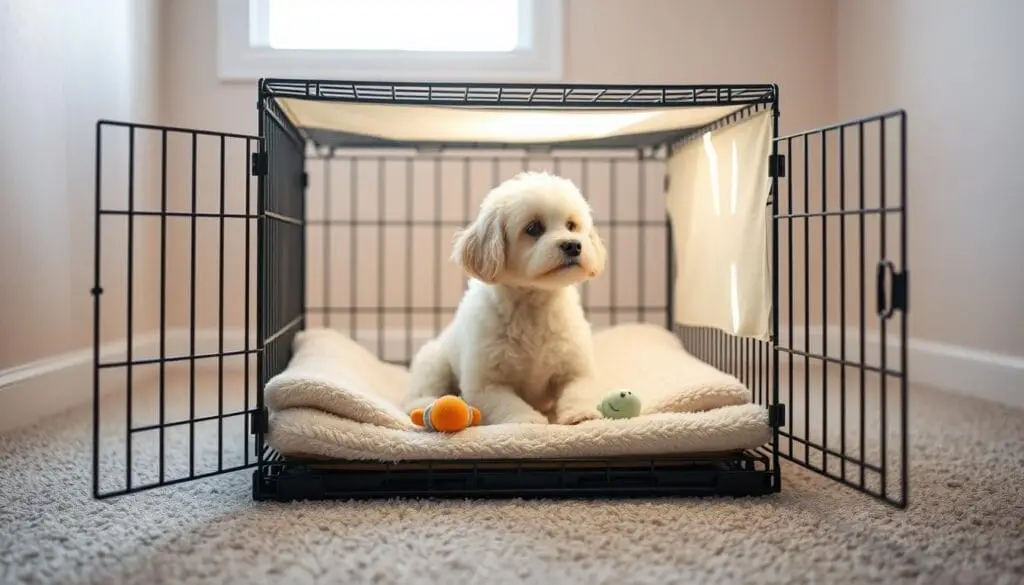
To make the crate a safe haven, introduce it positively. Place the crate in a common area and leave the door open. Encourage your pup to explore by:
- Placing treats and toys inside
- Feeding meals in the crate
- Praising your dog when they enter the crate voluntarily
Use positive reinforcement during crate training. Reward your dog with treats, praise, and affection when they show interest in or enter the crate.
Making the Crate a Safe Haven
To make the crate a comforting retreat, consider these tips:
| Crate Feature | Recommendations |
|---|---|
| Size | Just big enough for your dog to stand, turn around, and lie down comfortably |
| Bedding | Soft, cozy blankets or a cushioned mat |
| Location | Quiet area of your home, away from high-traffic zones |
| Crate Cover | Partially cover the crate to create a den-like atmosphere |
By introducing the crate positively and making it comfortable, you’ll help your small dog with separation anxiety. Consistency and patience are important in crate training.
Providing Mental Stimulation and Physical Exercise
Keeping your small dog mentally sharp and physically active is key to fighting separation anxiety. Engaging activities and regular exercise can lower their stress and boost their mood.
Engaging Toys and Puzzles
Engaging toys and puzzles are great for your dog’s mind. These toys challenge your dog and keep them busy when you’re away. Some good examples include:
- Treat-dispensing toys that require your dog to figure out how to access the treats
- Puzzle feeders that encourage problem-solving skills
- Chew toys with various textures and shapes to maintain interest
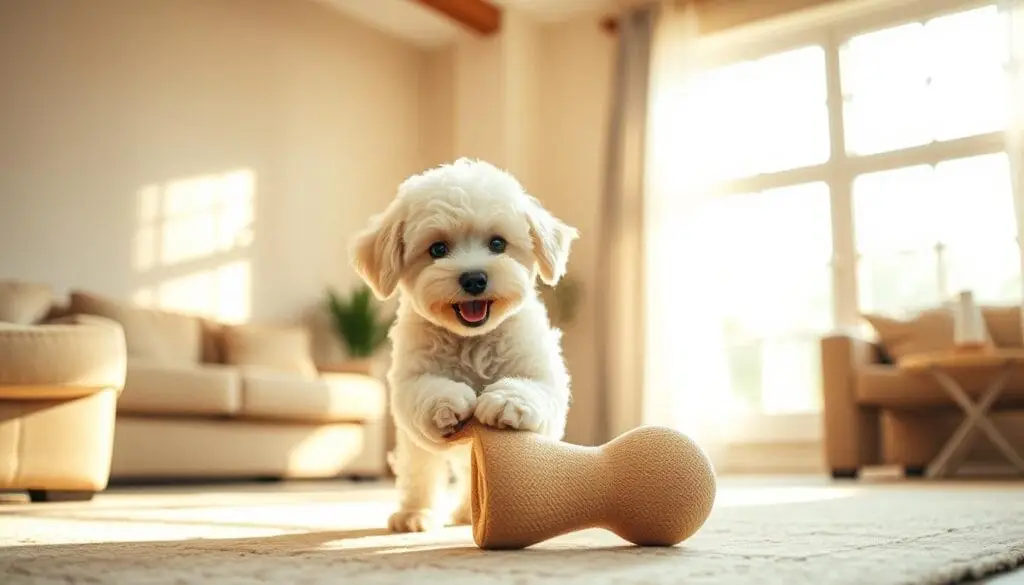
It’s important to change up the toys often to keep your dog interested. This variety helps prevent boredom and anxiety.
Regular Exercise and Playtime
Physical activity is also vital for small dogs with separation anxiety. It helps them release energy, reduces stress, and makes them feel calm. Try to give your small dog at least 30 minutes of exercise each day, based on their age, breed, and health.
Good exercises for small dogs include:
| Activity | Duration | Frequency |
|---|---|---|
| Walks | 15-30 minutes | 2-3 times daily |
| Playtime | 10-15 minutes | Multiple times daily |
| Fetch | 5-10 minutes | 1-2 times daily |
Don’t forget to play with your small dog too. Playing together not only exercises them but also strengthens your bond. This makes them feel more secure and less anxious when alone.
By mixing mental games with toys and puzzles with regular exercise and play, you can help your small dog manage separation anxiety. This way, they can live a happier, more balanced life.
Building Your Small Dog’s Confidence
Helping your small dog feel confident is key to overcoming separation anxiety. A confident dog is less stressed and fearful when left alone. Focus on socialization and positive experiences to boost their self-assurance.
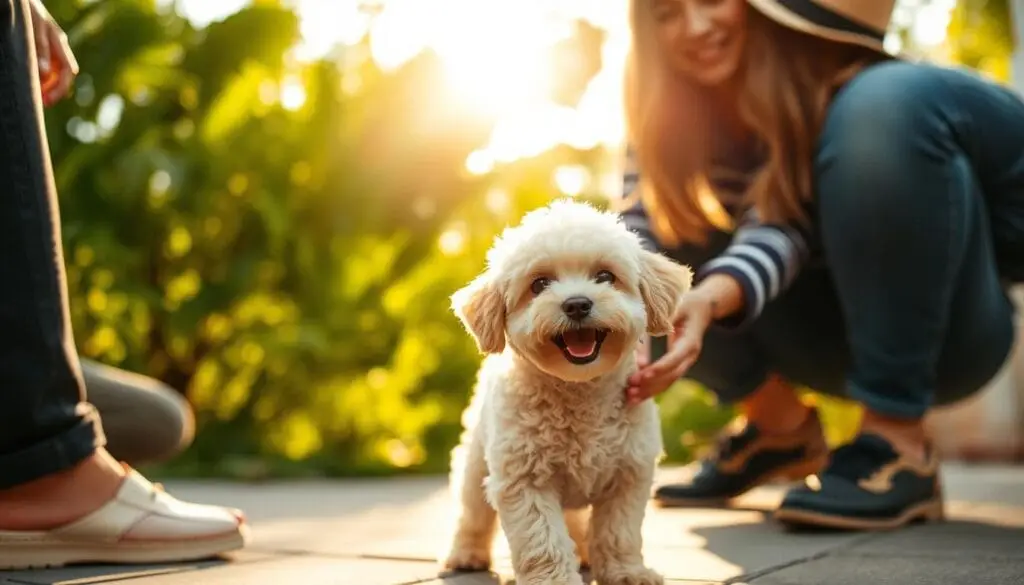
Socialization and Positive Experiences
Introduce your dog to new people, places, and situations to build confidence. Start with parks, pet-friendly stores, and friends’ homes. Make sure these outings are fun and rewarding with treats and praise for calm behavior.
Playdates with other dogs can also boost confidence. Supervised play with well-socialized dogs teaches social skills. Choose playmates that match your dog’s energy and temperament for a positive experience.
Basic Obedience Training
Obedience training is vital for confidence. Teach basic commands like sit, stay, come, and heel. This strengthens your bond and gives your dog a sense of accomplishment.
Use treats, praise, and toys to reward good behavior. Avoid punishment, as it increases anxiety. Focus on rewarding desired actions and redirecting when needed.
Consistency is essential in training. Set aside daily training sessions, even if short. As your dog learns, increase the difficulty and duration of training. With patience, your dog’s confidence will grow as they master new skills.
Managing Departures and Arrivals
Helping your small dog with separation anxiety starts with how you leave and come back. A calm departure routine and quiet arrivals can ease their anxiety. This makes them feel safer and more secure.
Start a consistent departure routine. Give your dog a special treat or toy before you go. Play calming music or let them relax in a cozy spot. Doing these things every time you leave helps your dog see it as a good thing, not scary.
When you come home, keep it quiet. It’s easy to get excited, but it can make your dog more anxious. Instead, be calm and brief when you greet them. Then, go about your day as usual until they calm down.
Here are some tips for managing departures and arrivals to help your small dog overcome separation anxiety:
- Establish a consistent departure routine
- Provide a special treat or toy before leaving
- Play calming music or white noise
- Create a comfortable space for your dog to relax in
- Keep arrivals low-key and avoid excessive excitement
- Greet your dog briefly and then resume your normal routine
| Departure Routine | Low-Key Arrival |
|---|---|
| Give a special treat or toy | Greet briefly and calmly |
| Play calming music | Avoid excessive excitement |
| Provide a comfortable space | Resume normal routine |
By using these tips, you can make your dog feel more at ease when you’re away. Remember, being consistent and patient is important. With time and effort, you and your dog will see great improvements.
Utilizing Dog Daycare and Pet Sitters
When your small dog has separation anxiety, finding the right care is key. Dog daycare and pet sitters are great options. They offer the care and attention your dog needs when you’re not there.
Benefits of Dog Daycare for Separation Anxiety
Dog daycare is a fun and social place for your small dog. It helps reduce their stress and anxiety when alone. Here are some benefits:
- Socialization with other dogs and people
- Constant supervision and attention from trained staff
- Engaging activities and playtime to keep your dog mentally and physically stimulated
- A structured routine that can help reduce anxiety
Regular visits to dog daycare can make your small dog feel more at ease. This can help them feel less anxious at home.
Choosing a Reliable Pet Sitter
If your dog prefers home, a reliable pet sitter is a good choice. Look for someone with experience in caring for anxious dogs. Consider these factors:
- Experience and qualifications in caring for dogs with separation anxiety
- Availability to provide regular visits or stays that align with your dog’s needs
- Willingness to follow your specific instructions and routines
- Positive reviews and references from other pet owners
A good pet sitter can give your dog the care they need at home. They can also give you feedback on your dog’s behavior. This helps you adjust your training and care plans.
By using dog daycare and pet sitters, you can help your small dog deal with separation anxiety. They’ll build confidence and thrive when you’re away.
Medication and Natural Remedies for Severe Cases
When small dogs have severe separation anxiety, it’s very sad for both the pet and the owner. It’s important to talk to a vet to find the best solution. They might suggest dog anxiety medication or natural remedies to ease your dog’s stress.
Consulting with a Veterinarian
If your small dog’s anxiety is very bad and doesn’t get better with training, see a vet. They will check your dog’s health and suggest treatments. Sometimes, they might prescribe antidepressants or anti-anxiety drugs to help your dog.
Exploring Natural Calming Supplements
If you want a natural way to help your dog, there are options. Natural remedies can help with severe separation anxiety in small dogs. Here are some:
- Calming herbs like chamomile, valerian root, and passionflower
- Essential oils such as lavender and vanilla
- CBD oil or treats made just for dogs
- L-theanine, an amino acid from green tea that helps relax
Before trying natural supplements, talk to your vet. They can make sure they’re safe for your dog. They’ll also help with the right amount and any possible side effects.
How to Help Small Dogs Overcome Separation Anxiety
Helping your small dog with separation anxiety needs patience, consistency, and the right training. By using the strategies from this article, you can make your dog’s life calmer. You’ll also help them become more confident and independent.
Consistency and Patience in Training
It’s important to be consistent when training your dog. Create a routine that includes regular exercise, play, and rest. Remember, progress might be slow, and you might face setbacks. So, patience in training is essential.
Celebrate every small win. Stay committed to the training, even when it’s tough.
Seeking Professional Help from a Dog Trainer or Behaviorist
If your dog’s anxiety doesn’t get better, or if it’s really bad, get professional help. A certified professional dog trainer or dog behaviorist can help. They’ll create a plan just for your dog and teach you how to help.
Choose a professional with experience in small dogs and success in treating anxiety. They can:
- Find out what makes your dog anxious
- Make a plan to help your dog get used to being alone
- Teach your dog how to handle anxiety
- Help you manage when you leave and come back
- Suggest tools and toys to help your dog relax
Overcoming separation anxiety is a long journey. It takes dedication, patience, and a team of supporters. With a professional’s help and consistent training, your small dog can live a happier, more confident life.
Preventing Separation Anxiety in Puppies
It’s important to prevent separation anxiety in your small breed puppy. This helps them grow into confident, well-adjusted dogs. Start puppy training early, focusing on getting them used to being alone.
Start by leaving your puppy alone for short times in a separate room or crate. Make sure they have fun toys and treats. As they get more comfortable, you can leave them alone for longer.
Early socialization is also vital. Introduce your puppy to different people, animals, and places in a positive way. This builds their confidence and makes them less anxious when you’re not around.
A well-socialized puppy is more likely to grow into a confident, well-adjusted adult dog.
Training your puppy needs patience and consistency. Always celebrate their small wins and never scold them for being anxious. With the right training, your puppy will be emotionally strong and independent for life.
FAQ
Q: What should I do if my dog becomes anxious when I leave the house?
A: First, take a deep breath! It’s not uncommon for a dog with separation anxiety to feel a bit uneasy when you leave. Start by practicing short departures to help your dog acclimate. Gradually increase the length of separation, and remember, never punish your dog for their anxiety; they’re just not fans of being home alone!
Q: How can I tell if my dog has separation anxiety?
A: Look for signs of anxiety in dogs such as excessive barking, chewing on furniture, or even trying to escape. If your dog acts like they’re auditioning for a role in a drama when you pick up your keys, they might be experiencing separation anxiety. Pay attention to these behaviors to help identify the issue.
Q: Is it okay to leave my dog alone for long periods of time?
A: Unless you want to return home to a canine Picasso who’s redecorated your cushions, it’s best to avoid long separations. Dogs that develop separation anxiety typically struggle with extended periods alone. Aim for shorter separations and consider hiring a dog walker if you’ll be gone longer than your dog can handle.
Q: Should I punish my dog for their behavior problems related to separation anxiety?
A: Absolutely not! Punishing your dog for dog separation anxiety will only exacerbate their stress. Instead, focus on treating separation anxiety with positive reinforcement and gentle training techniques. Remember, your dog is not being naughty; they’re simply feeling insecure!
Q: Can I help a dog with mild separation anxiety?
A: Yes, you can! Start with gradual desensitization. Leave your dog alone for short periods and gradually increase the length of time you’re gone. Incorporating interactive toys, like a food toy, can also help distract them while you’re away. Just make sure that your dog is comfortable before you take the plunge into longer separations!
Q: What should I do if my new dog shows signs of separation anxiety?
A: Patience is key! When you bring home a new dog, they may need time to adjust. Establish a routine and practice short absences. If your new dog won’t stop howling when you leave, consider using calming aids or consulting a professional for dog separation anxiety training.
Q: Is there a specific treatment of separation anxiety that works best?
A: The best treatment of separation anxiety often involves a combination of behavioral training, gradual desensitization, and sometimes, consultation with a vet for medication. Every dog is unique, so what works for one dog with separation anxiety might not work for another. Tailor your approach to fit your dog’s personality!
Q: How long does it take for a dog to overcome separation anxiety?
A: The timeline can vary widely! Some dogs may show improvement in a few weeks, while others may take months. Consistency is crucial, and the length of separation you practice can affect how quickly your dog adapts. Just like a dog won’t become a master chef overnight, they won’t overcome separation anxiety immediately!
Q: Can I leave my dog with a friend or a dog walker to help with their anxiety?
A: Absolutely! Leaving your dog with a friend or hiring a dog walker can be a great way to ease their anxiety while you’re gone. It’s like giving them a mini-vacation with a buddy! Just make sure that the person understands your dog’s needs and can help them feel secure while you’re away.
Conclusion
Understanding separation anxiety in small dogs is key. By using the strategies from this article, you can help your pet feel better. A calm environment, gradual training, and exercise are important.
Building your dog’s confidence through socialization and training also helps. This can make a big difference. Remember, overcoming separation anxiety takes time, patience, and dedication.
Manage your dog’s departure and arrival calmly. Consider dog daycare or pet sitters for extra help. If your dog’s anxiety is severe, talk to your vet about medication or natural supplements.
With love and the right approach, your small dog can overcome separation anxiety. Don’t be afraid to ask for help from a dog trainer or behaviorist. By working together, you can strengthen your bond and ensure your dog’s happiness.