
Are you giving your small dog the best supplements? With many options, picking the right one for your dog can be tough. Small dogs need special care because of their size and health issues.
Good nutrition is key for your small dog’s health. Adding the right supplements can help. Knowing your dog’s age, breed, and health needs helps you choose the best supplements.
Key Takeaways
- Small dogs have unique nutritional needs that differ from larger breeds
- Choosing the right supplements is key for your small dog’s health
- Think about your dog’s age, breed, and health when picking supplements
- Quality supplements can fill diet gaps for your small dog
- Talk to your vet to find the best supplements for your dog
Understanding Your Small Dog’s Nutritional Needs
To keep your small dog healthy and happy, knowing their nutritional needs is key. Dogs, like humans, have specific dietary needs that change with age and breed. Tailoring their diet and supplements can help them grow and stay well.
When picking dog foods and supplements, think about your dog’s life stage. Puppies need lots of calories, protein, and minerals for growth. Adult dogs need a balanced diet to stay healthy. Senior dogs might need lower-calorie foods and supplements for age-related issues.
Age-Specific Requirements
Here’s a quick look at what small dogs need at different ages:
- Puppies: High-quality protein, calcium, and phosphorus for growth
- Adults: Balanced diet with enough protein, fat, and carbs for energy
- Seniors: Less calories, more fiber, and joint support supplements
Breed-Specific Considerations
Also, your dog’s breed can affect their nutritional needs. Some breeds face health issues that diet can help manage. For instance:
- Chihuahuas may need foods that help with dental health and prevent low blood sugar
- Yorkies might benefit from foods that support healthy skin and coat
- Pugs could do well on foods that help with weight and joint health
“A well-balanced diet is the foundation of your small dog’s health and happiness. By understanding their unique nutritional needs, you can make informed choices about the best dog foods and minerals for dogs to keep them thriving.”
If you’re unsure, always talk to your vet. They can guide you on the best diet and supplements for your dog. This ensures your furry friend gets the nutrients they need for a long, healthy life.
Essential Vitamins and Minerals for Small Dogs
As a small dog owner, you want to make sure your pet gets all the vitamins for dogs and minerals for dogs. These nutrients are key for their growth, health, and well-being. They help with everything from a strong immune system to healthy bones and teeth.
- Vitamin A: Helps with vision, skin, and coat health
- Vitamin D: Keeps bones and teeth strong by balancing calcium and phosphorus
- Vitamin E: Acts as an antioxidant and boosts the immune system
- B-complex vitamins: Important for energy and the nervous system
Important minerals for small dogs include:
- Calcium: Essential for strong bones and teeth
- Phosphorus: Works with calcium for bone health
- Iron: Needed for red blood cells and oxygen transport
- Zinc: Supports the immune system, skin, and coat
Even with a good diet, some small breeds might need extra vitamins and minerals. Talking to your vet can help figure out if your dog needs supplements. This ensures they get the best canine nutrition.
Omega-3 Fatty Acids for Optimal Health
Omega-3 fatty acids are key for your small dog’s health. They offer many benefits that keep your pet in great shape. Understanding the role of dog health supplements and omega-3s is vital.
Benefits of Omega-3s for Small Dogs
Omega-3s have many benefits for small dogs. They include:
- Promoting a healthy skin and coat
- Supporting brain and eye development
- Reducing inflammation throughout the body
- Boosting the immune system
- Aiding in joint health and mobility
Adding omega-3s to your dog’s diet can make their coat shiny, eyes sharp, and immune system strong. These fatty acids are also important for canine nutrition. They help with brain function and joint health as your dog gets older.
Sources of Omega-3 Fatty Acids
There are several ways to get omega-3s into your dog’s diet. Some of the best sources include:
- Fish oil supplements: Fish oil is a top source of omega-3s, like EPA and DHA. Choose high-quality fish oil supplements that are purified.
- Omega-3-rich foods: Foods like fatty fish, flaxseed, and chia seeds are full of omega-3s. You can add these to your dog’s diet or use pet health supplements.
- Specially formulated dog foods: Some dog foods are made with omega-3s. These can be a simple way to ensure your dog gets the right nutrients.
Always talk to your vet before adding new supplements or changing your dog’s diet. They can give advice tailored to your dog’s needs and help pick the best omega-3 sources.
Probiotics and Digestive Support
Keeping your small dog’s digestive system healthy is key to their overall well-being. Probiotics, which are good bacteria, are essential for gut health. Adding dog supplements with probiotics to your pet’s diet can help. It can regulate gut flora, boost the immune system, and solve digestive problems.
Probiotics help restore the balance of good bacteria in your small dog’s gut. This is very important for small breed supplements because these dogs often face digestive sensitivities. A balanced gut flora prevents harmful bacteria growth, reduces inflammation, and improves nutrient absorption.
Some benefits of probiotics for small dogs include:
- Alleviating diarrhea and constipation
- Reducing gas and bloating
- Supporting a healthy immune system
- Enhancing nutrient absorption
- Promoting overall digestive comfort
When picking dog health supplements with probiotics, choose high-quality ones. Look for strains like Lactobacillus and Bifidobacterium. These have been studied and proven to support digestion in dogs. Make sure to pick supplements made for small breeds to get the right amount and effectiveness.
Joint Support Supplements for Small Breeds
Small breed dogs often face joint problems due to their size and active nature. It’s vital for pet owners to find pet health supplements that help with joint health and mobility. Look for dog supplements with glucosamine and chondroitin for joint support.
Glucosamine and Chondroitin
Glucosamine and chondroitin are found in cartilage and help keep joints healthy. They boost the production of synovial fluid, which lubricates and protects joints. These small breed supplements can lessen inflammation, ease pain, and slow arthritis.
The right amount of glucosamine and chondroitin for small dogs depends on their weight:
| Dog Weight (lbs) | Glucosamine (mg) | Chondroitin (mg) |
|---|---|---|
| Under 10 | 250-500 | 200-400 |
| 10-25 | 500-1,000 | 400-800 |
| 25-50 | 1,000-1,500 | 800-1,200 |
MSM and Hyaluronic Acid
MSM and hyaluronic acid are also good for joint health in pet health supplements. MSM reduces inflammation and pain, while hyaluronic acid lubricates and cushions joints.
When picking dog supplements for joint care, choose ones with glucosamine, chondroitin, MSM, and hyaluronic acid. These ingredients help keep small breed joints healthy together.
Antioxidants for Immune System Health
As a small dog owner, you want your furry friend to stay healthy and happy. Adding antioxidants for dogs to their diet is a great way to support their immune system. Antioxidants fight free radicals, reduce oxidative stress, and help with overall health and longevity.
Free radicals are unstable molecules that can harm cells and lead to health issues like cancer and premature aging. Antioxidants like vitamins A, C, and E, and selenium and beta-carotene, neutralize these harmful molecules. They protect your small dog’s cells and boost their immune system.
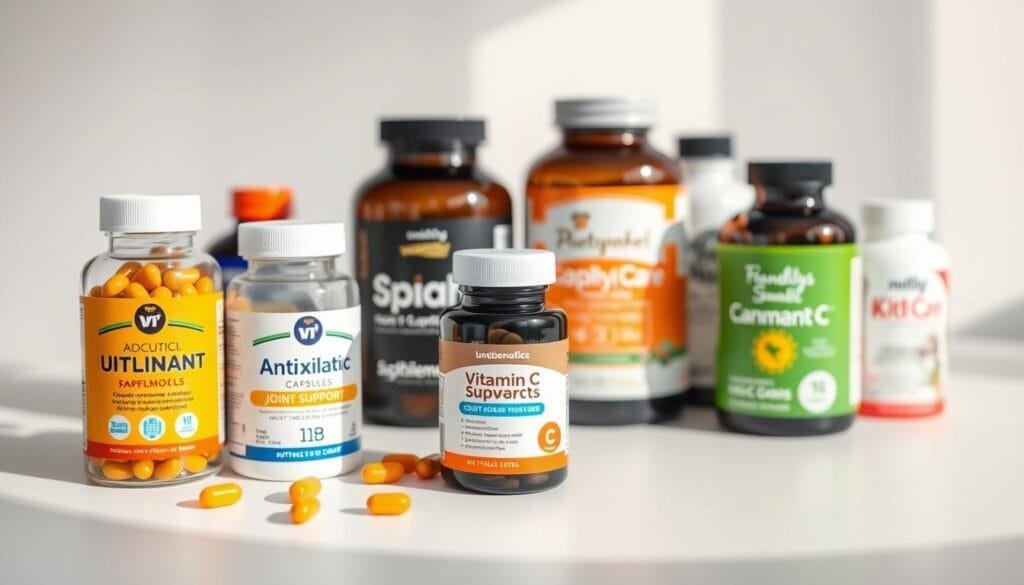
When picking dog health supplements, look for a balanced mix of antioxidants. Many good dog foods already have these nutrients. But, adding supplements can give your small dog’s immune system an extra boost. Always talk to your vet before starting any new supplements to make sure they’re safe and right for your dog.
You can also help your small dog’s immune system by feeding them a balanced diet. Include lean meats, fruits, and vegetables. These natural sources of antioxidants help keep your furry friend healthy and strong. This way, they can live a long and happy life with you.
How to Choose the Best Supplements for Small Dogs
Choosing the right dog supplements for your small dog is key. It ensures their health and happiness. With many pet health supplements out there, picking the best can be tough.
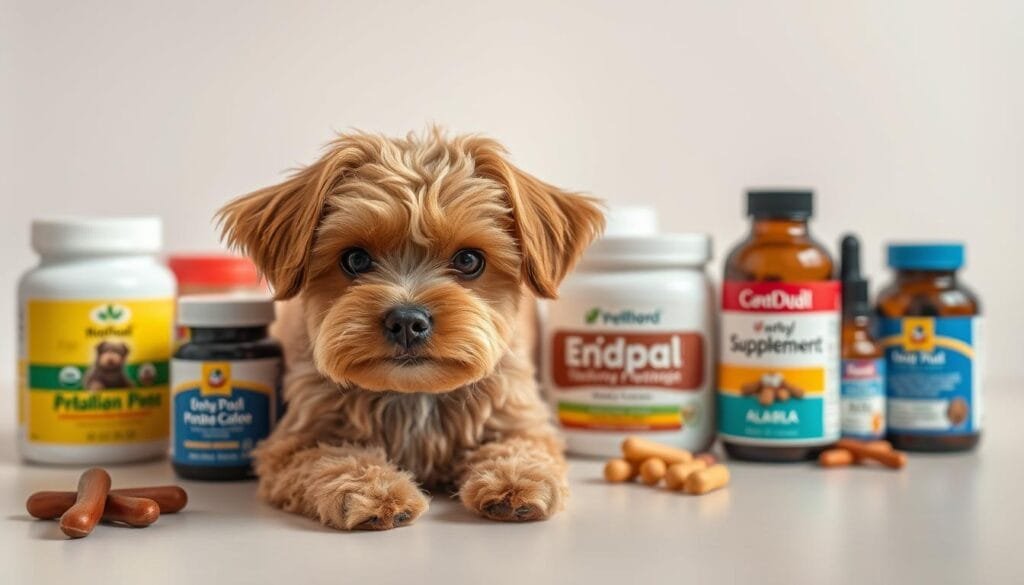
Start by checking the quality and reputation of the maker. Choose companies known for safe, effective small breed supplements. Look into their manufacturing, ingredient sources, and any certifications.
Ingredients and Dosage
Check the ingredients and how much to give your dog. Make sure it has the nutrients your small dog needs, like omega-3s or probiotics. Avoid supplements with fillers or unclear ingredients.
Also, consider the right amount for your dog’s size. Small dogs need special care in their supplements. Look for clear instructions for small breeds.
Consulting with Your Veterinarian
Always talk to your vet before starting new supplements. They know what’s best for your dog’s health and age. Your vet can also check for any safety issues with other supplements or medicines.
| Factor | Importance |
|---|---|
| Manufacturer Reputation | Ensures quality, safety, and effectiveness |
| Ingredients and Dosage | Provides targeted nutrition for small breeds |
| Veterinarian Consultation | Offers personalized guidance and safety |
By choosing the right small breed supplements, you support your dog’s health. It’s a loving act as a pet owner. Remember, your pet’s well-being is worth it.
Incorporating Supplements into Your Small Dog’s Diet
Adding supplements to your small dog’s diet can greatly improve their health. It’s important to pick the right supplements and know how to give them. This ensures your dog gets the most benefits.
There are many types of supplements for small dogs, like chews, powders, and liquids. Each type has its own benefits. Chews are tasty and easy to give. Powders mix into food, great for picky eaters. Liquids are good for dogs with dental problems or who can’t chew.
Choosing the Right Form (Chews, Powders, Liquids)
When picking supplements, think about your dog’s age, size, and taste. Also, consider how easy it is to give them. And think about what health issues you want to address.
- Your dog’s age and size
- Their taste preferences
- Ease of administration
- The specific health concerns you’re targeting
If your dog is finicky, a powder might be best. But if they love treats, a chew could be better for both of you.
Proper Dosage and Administration
After picking the right supplements, follow the dosage and how to give them carefully. Always check the label and talk to your vet. They can help figure out the right amount based on your dog’s needs.
Don’t give too many supplements. It could harm your dog or mess with their regular diet. Some supplements need to be given several times a day. Others can be given once a day, with or without food.
Adding supplements to your dog’s diet needs thought about their needs and likes. By choosing wisely and following the right dosage, you can support their health. Remember, supplements are meant to help, not replace a good diet. They ensure your small dog gets everything they need for a happy, healthy life.
Potential Risks and Side Effects of Dog Supplements
Dog supplements can greatly benefit your small dog’s health. But, it’s key to know about possible risks and side effects. Not every pet health supplement is safe or effective. Using low-quality or wrong products can harm your dog.
The canine nutrition supplement industry lacks strict rules. This means some products might have harmful stuff. They could upset your dog’s stomach, cause allergies, or even be toxic. To avoid these problems, pick high-quality, vet-approved supplements from trusted brands.
Another big worry is how supplements might affect your dog’s meds or health issues. For instance, some supplements can mess with blood clotting. This is bad for dogs on blood thinners. Others might make kidney or liver problems worse. Always talk to your vet before adding new supplements to your dog’s diet.
Watch for signs of trouble when you start your dog on dog supplements. Look out for:
- Vomiting or diarrhea
- Loss of appetite
- Lethargy or weakness
- Skin irritation or itching
- Difficulty breathing
If your dog shows any of these symptoms after taking a supplement, stop it right away. Then, call your vet. Knowing the risks and side effects of pet health supplements helps keep your dog safe. Working with your vet ensures your dog gets the best canine nutrition support.
When to Consult with Your Veterinarian
As a responsible pet owner, keeping your small dog healthy is key. Dog health supplements can help meet their nutritional requirements. But, always talk to your vet before adding new supplements to their diet. Your vet can give advice tailored to your dog’s needs and guide you through canine nutrition.
Talking to your vet early is important if you see signs of nutrient lack in your dog. These signs include:
- Dull, dry coat
- Lethargy or weakness
- Poor appetite
- Digestive issues
- Slow wound healing
If you see these signs, see your vet right away. They can check your dog, do tests, and see if they need nutritional supplements.
Pre-Existing Health Conditions
When thinking about dog health supplements, tell your vet about any health issues your dog has. Some supplements can affect medications or make health problems worse. So, getting your vet’s advice is very important.
For instance, if your dog has kidney problems, your vet might say no to high-phosphorus supplements. If your dog’s stomach is sensitive, your vet can suggest gentle supplements that fit their nutritional requirements.
By working with your vet and focusing on your dog’s needs, you can pick safe and effective dog health supplements. This way, you help your dog stay healthy and happy for a long time. Remember, knowing about canine nutrition and being proactive is the best way to care for your pet.
FAQ
Q: What is the best supplement for dogs to support their joint health?
A: The best supplements for dogs targeting joint health often include glucosamine and chondroitin. These joint supplements help alleviate discomfort and promote mobility, especially in older dogs. Always consult your vet before starting any new regimen!
Q: Are multivitamins for dogs truly necessary?
A: While a balanced diet is essential, many dog owners find that multivitamins can help fill nutritional gaps. If your pup isn’t getting all the nutrients they need from their pet food, a multivitamin for dogs can be a fantastic supplement for dogs.
Q: Can I give my dog human supplements like fish oil or vitamin E?
A: While some human supplements are safe for dogs, it’s crucial to consult your veterinary. Fish oil is often touted for its omega-3 benefits, but dosages differ between pups and humans. Remember, supplements for your dog should be tailored to their needs!
Q: What are the benefits of B vitamins for dogs?
A: B vitamins play a vital role in your dog’s energy production and overall health. They support cognitive function, promote a healthy coat, and can even help with digestion. So, if your canine companion seems a bit sluggish, it might be time to consider a B vitamin boost!
Q: How do I find the best supplements for dogs?
A: To find the best supplements for dogs, look for products with the National Animal Supplement Council (NASC) seal of approval. This indicates that the supplements are made with quality ingredients and adhere to safety standards. Always read labels and consult your vet for personalized recommendations!
Q: Are soft chew supplements more effective than capsules for dogs?
A: Soft chews can be a delightful treat for dogs and may be easier for them to consume than capsules. Many pups prefer the taste of chews for dogs, which can make supplementation a breeze—just ensure the ingredients are safe and effective!
Q: How do supplements support older dogs specifically?
A: Older dogs often require different nutritional support to maintain their joint health, heart health, and cognitive function. Specialized canine supplements are designed to meet these needs, providing essential nutrients that may not be as readily available in their pet food.
Q: Is it safe to use multiple supplements for your dog at once?
A: While many dogs can safely use supplements together, it’s essential to consult your veterinary. Some supplements may interact or lead to overdoses of certain vitamins. Always keep your vet in the loop to ensure your pup stays healthy and happy!
Conclusion
Choosing the best dog supplements for your small breed companion is key. It supports their unique nutritional needs and promotes optimal health. Understanding their age-specific and breed-specific needs helps you make the right choice.
Look for high-quality, scientifically-backed supplements from trusted manufacturers. Check the ingredients and dosage carefully. Always talk to your vet before adding new supplements to your dog’s diet. They can help spot any nutrient gaps or health issues.
Adding the right small breed supplements to your dog’s diet is important. Whether in chews, powders, or liquids, they provide essential nutrients. Vitamins, minerals, omega-3 fatty acids, probiotics, joint support, and antioxidants help your small dog stay healthy and happy.