
Did you know up to 10% of dogs have sensitive stomachs and digestive issues? Small breed dogs face this problem more often because of their special needs. If your small dog has stomach sensitivities, it’s key to find the right food for their comfort and health.
In this guide, we’ll look at the best foods for small dogs with sensitive stomachs. We’ll cover limited ingredient and hypoallergenic options. You’ll learn about the common causes and signs of sensitive stomachs in small breeds. We’ll also share tips on switching to a new food and when to see a vet.
Key Takeaways
- Small breed dogs are more prone to sensitive stomachs due to their unique physiology
- Common causes include food allergies, intolerances, and stress
- Look for easily digestible, limited ingredient, and hypoallergenic dog food options
- Gradually transition to a new food and monitor your dog’s response
- Consult with your vet if symptoms persist or worsen
Understanding Sensitive Stomachs in Small Dogs
Small dogs often have sensitive stomachs, which can cause discomfort and digestive problems. As a pet owner, knowing the common causes and symptoms is key. This knowledge helps you support your dog’s digestive health and overall well-being.
Common Causes of Sensitive Stomachs
Several factors can lead to sensitive stomachs in small dogs. Some common causes include:
- Food allergies: Some ingredients in dog food can cause allergic reactions, leading to digestive upset.
- Intolerances: Food intolerances happen when a dog’s body can’t process certain ingredients, causing gastrointestinal issues.
- Bacterial imbalances: Too much bad bacteria in the gut can upset the digestive system, causing sensitivity and discomfort.
- Stress and anxiety: Emotional stress can greatly affect a small dog’s digestive health, making sensitivity worse and causing symptoms.
Symptoms of Sensitive Stomachs in Small Dogs
It’s important to recognize the signs of a sensitive stomach in your small dog. Common symptoms include:
| Symptom | Description |
|---|---|
| Vomiting | Frequent or occasional vomiting after meals or between feedings |
| Diarrhea | Loose, watery, or mucus-filled stools that persist for more than a day |
| Loss of appetite | Reluctance to eat or a decrease in normal food intake |
| Bloating | Visible swelling or discomfort in the abdominal area |
| Excessive gas | Frequent belching or flatulence that is unusual for your dog |
If you see any of these symptoms often or together, it’s time to talk to your vet. They can find out why your dog’s stomach is sensitive and suggest the best diet or treatment to help.
Key Qualities of the Best Foods for Small Dogs with Sensitive Stomachs
Looking for the best dog food for your small pup with a sensitive stomach? There are key qualities to look for. The ideal food should be gentle on your dog’s digestive system. It should also provide balanced nutrition for their health and well-being.
Easily Digestible Ingredients
One key feature is easily digestible ingredients. Choose foods with high-quality, whole food ingredients like real meat, fruits, and vegetables. These are more bioavailable and easier for your dog to digest than processed ingredients.
Some good ingredients include:
- Lean meats like chicken, turkey, or fish
- Whole grains like brown rice or oatmeal
- Fruits and vegetables such as sweet potatoes, pumpkin, and blueberries
Limited Ingredient Formulas
Another important quality is a limited ingredient formula. These recipes have fewer ingredients, focusing on a single protein source and a few carbohydrates. This simplicity reduces the risk of adverse reactions and helps identify which ingredients your dog can tolerate.
Look for novel protein sources like duck, venison, or rabbit. These are less likely to cause intolerance or allergic responses.
Hypoallergenic Options
For very sensitive small dogs, a hypoallergenic dog food might be needed. These diets use hydrolyzed proteins that are unlikely to trigger an immune response. They may also be grain-free to avoid common allergens like wheat, corn, and soy.
“Hypoallergenic dog foods can be a lifesaver for small dogs with severe sensitivities or allergies. By using extensively hydrolyzed proteins and carefully selected carbohydrates, these diets minimize the risk of adverse reactions while meeting your dog’s nutritional needs.”
When choosing the best food for your small dog with a sensitive stomach, look for easily digestible ingredients, limited ingredient formulas, and hypoallergenic properties as needed. These qualities will support your pup’s delicate digestive system and overall health.
Best Foods for Small Dogs with Sensitive Stomachs
Finding the right food for your small dog with a sensitive stomach is key. There are many top-rated dog foods and sensitive stomach formulas that can help. These foods are often suggested by vets because of their quality and special ingredients.
Hill’s Science Diet Sensitive Stomach & Skin Small & Mini Breed Dry Dog Food is a top pick. It’s made for small breeds and has easy-to-digest ingredients like chicken meal and barley. It also has prebiotic fiber for digestion and omega-6 fatty acids for skin and coat health.
Royal Canin Small Breed Adult Dry Dog Food is another great choice. It’s veterinary-recommended and made for small dogs. It has digestible proteins and fiber for good digestion. It also has EPA and DHA for skin and coat health.
For a grain-free option, try Wellness Simple Limited Ingredient Diet Small Breed Salmon & Potato Recipe. This sensitive stomach formula has salmon as the main protein and potatoes as carbs. It’s also free from common allergens like wheat, corn, and soy.
When picking a food for your small dog, consider a few things:
- Easily digestible ingredients
- Limited ingredient formulas
- Hypoallergenic options
- Veterinary recommendations
Choosing a high-quality, veterinary-recommended food is important. It helps keep your small dog’s digestion healthy and improves their overall well-being.
Homemade Diets for Small Dogs with Sensitive Stomachs
Some pet owners choose to make homemade dog food recipes for their small dogs. This way, they can control what goes into their pet’s meals. It’s a good option for dogs with sensitive stomachs.
Simple Homemade Recipe Ideas
For a homemade diet, pick ingredients that are easy to digest. Here are some ideas:
- Boiled chicken or lean ground beef with cooked white rice and steamed vegetables
- Baked sweet potato mixed with lean turkey and green beans
- Cooked oatmeal with scrambled egg whites and pumpkin puree
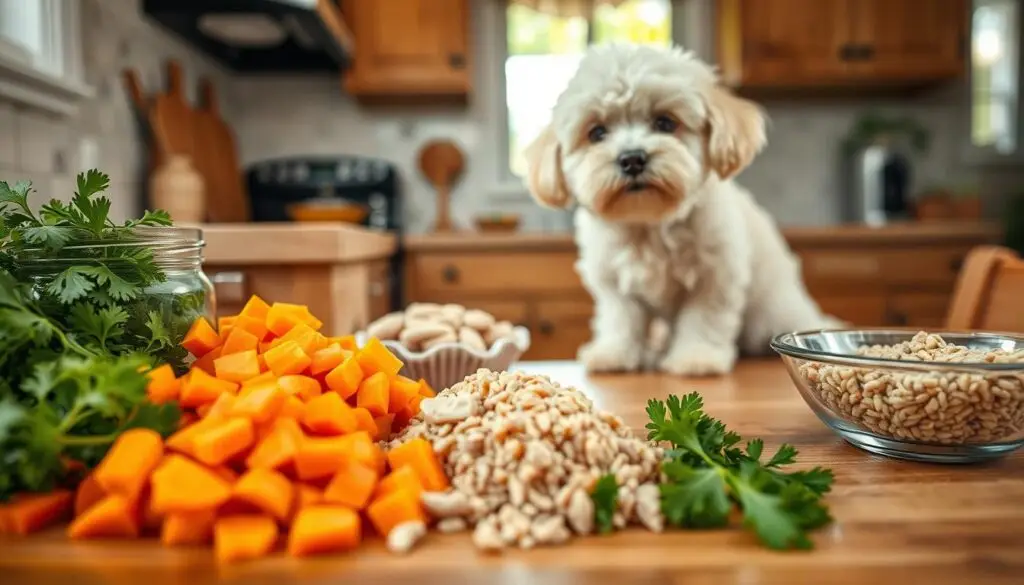
These recipes are gentle on a dog’s stomach. They help ease digestion and improve nutrient absorption.
Precautions and Considerations for Homemade Diets
Homemade diets have their benefits, but there are things to watch out for:
- Always talk to your vet before starting a homemade diet. They’ll check if it’s right for your dog.
- Make sure the diet has the right mix of nutrients. This includes protein, carbs, fats, vitamins, and minerals.
- Watch out for ingredients that might cause allergies. These include dairy, soy, and some proteins.
- Follow safe food handling practices when making and storing homemade meals.
Remember, veterinary supervision is key for a homemade diet. Your vet can help make sure your dog’s diet is balanced. They’ll also keep an eye on your dog’s health.
Transitioning to a New Food for Your Small Dog with a Sensitive Stomach
When you find the best food for your small dog with a sensitive stomach, it’s important to make the switch smoothly. A gradual food transition is key to preventing digestive upset and helping your dog adjust to their new diet.

Gradual Transition Process
To avoid digestive problems, follow this 10-day transition plan:
| Day | Old Food | New Food |
|---|---|---|
| 1-3 | 75% | 25% |
| 4-6 | 50% | 50% |
| 7-9 | 25% | 75% |
| 10 | 0% | 100% |
By gradually adding more new food and less old, you help your dog’s sensitive stomach adjust. This reduces the chance of stomach upset.
Monitoring Your Dog’s Response
Keep a close eye on your dog during the transition for any signs of digestive issues, such as:
- Vomiting
- Diarrhea
- Loss of appetite
- Lethargy
Using monitoring tools like a food journal can help track your dog’s reaction to the new food. If you see any concerning signs, slow down the transition or talk to your vet. With patience and care, you can help your small dog smoothly switch to a new, sensitive stomach-friendly diet.
Feeding Tips for Small Dogs with Sensitive Stomachs
When caring for a small dog with a sensitive stomach, good feeding habits are key. These tips can help your furry friend feel better and stay healthy.

Start with a consistent feeding schedule. Small dogs with sensitive stomachs do well with smaller, more frequent meals. Feed them two to three times a day, at the same times. This helps their digestive system work better and more predictably.
Portion control is also important. Too much food can make digestive issues worse. Use a precise measuring cup to measure your dog’s food. Stick to the serving sizes on the packaging or ask your vet for the right amount based on your dog’s size, age, and activity level.
Make sure your dog’s mealtime environment is calm and quiet. Pick a spot away from busy areas and other pets. This reduces stress and lets your dog focus on eating. If your dog eats too fast, try a slow-feeder bowl or puzzle feeder to slow them down.
Proper food storage is also key. Keep your dog’s food in an airtight container in a cool, dry place. This keeps the food fresh and prevents contamination. If using wet food, refrigerate leftovers and throw them away after a few days.
Following these feeding tips can help your small dog’s sensitive stomach and improve their digestive health. Remember, every dog is different. Be patient and adjust your approach as needed based on your pet’s unique needs and how they respond.
When to Consult with Your Veterinarian
Changing your small dog’s diet can help with a sensitive stomach. But, sometimes, you need to see a vet. It’s important to know when your dog needs medical help for their stomach issues.
Persistent or Severe Symptoms
If your small dog has symptoms like these, it’s time to go to the vet:
- Vomiting or diarrhea for more than 24 hours
- Blood in the stool or vomit
- Not wanting to eat for more than a day
- Feeling tired or weak
- Stomach pain or discomfort
These signs might mean a serious health problem. This could be an infection, pancreatitis, or a blockage in the intestines. Your vet will check your dog and might do tests to find out what’s wrong.
Considering Prescription Diets
Your vet might suggest a prescription dog food for your dog’s sensitive stomach. These foods are made to be easy on the stomach and give the right nutrients.
Prescription diets for sensitive stomachs have:
| Characteristic | Benefit |
|---|---|
| Highly digestible proteins | Easier on the digestive system |
| Prebiotics and probiotics | Support healthy gut flora |
| Omega-3 fatty acids | Reduce inflammation in the GI tract |
| Antioxidants | Boost immune system function |
Your vet will help pick the best diet for your dog. They’ll tell you how to switch to the new food and watch how your dog does.
Frequently Asked Questions about Feeding Small Dogs with Sensitive Stomachs
As a pet parent, you might wonder about feeding your small dog with a sensitive stomach. We’ve got answers to common questions to help you out.
- How often should I feed my small dog with a sensitive stomach?
Feed your small dog with a sensitive stomach smaller, more frequent meals. This makes digestion easier and avoids overloading their stomach. Aim for 3-4 meals a day.
- Should I avoid certain ingredients when feeding my small dog with a sensitive stomach?
Yes, avoid common allergens and hard-to-digest ingredients like wheat, corn, soy, and artificial additives. Choose formulas with high-quality protein and gentle carbs like rice or potato.
- Can I feed my small dog with a sensitive stomach table scraps?
No, it’s best not to give table scraps to your small dog with a sensitive stomach. Human foods can be hard for dogs to digest or even toxic. Stick to a diet recommended by your vet for sensitive stomachs.
Here’s a quick comparison of feeding practices for small dogs with sensitive stomachs versus those with normal digestive systems:
| Feeding Practice | Sensitive Stomach | Normal Digestive System |
|---|---|---|
| Meal Frequency | 3-4 smaller meals per day | 2 meals per day |
| Ingredient Selection | Limited, easily digestible ingredients | Variety of ingredients |
| Table Scraps | Avoid completely | Occasional, small amounts |
Every dog is different, so what works for one might not work for another. Watch how your dog reacts to new foods or feeding routines. If you’re worried, talk to your vet. With the right approach, you can manage your small dog’s sensitive stomach and keep them happy and healthy.
FAQ
Q: What is the best dog food for sensitive stomachs?
A: The best dog food for sensitive stomachs often includes easily digestible ingredients. Look for options with limited protein sources, natural prebiotics, and no fillers. Some popular brands for sensitive dogs are Purina Pro Plan and Royal Canin.
Q: How can I help my dog with an upset stomach?
A: To help your dog with an upset stomach, consider switching to a bland diet temporarily. Foods like boiled chicken (no skin) and white rice can be a great start. Just remember, don’t forget to consult your vet if symptoms persist!
Q: Are there special diets for dogs with gi upset?
A: Absolutely! There are prescription diets for dogs that focus on gastrointestinal health. These diets typically contain highly digestible ingredients that help soothe the gut and promote healthy digestion.
Q: Can I feed my puppy dog food for sensitive stomachs?
A: Yes, you can feed your puppy dog food for sensitive stomachs, but be sure it’s formulated specifically for puppies. Look for a complete and balanced diet that supports their growth while being gentle on their tummies.
Q: What are the signs my dog has a sensitive stomach?
A: Signs of a sensitive stomach include frequent vomiting, diarrhea, gas, or general discomfort after meals. If your dog seems to be having a rough time, it might be time to evaluate their dog food ingredients and consider a switch.
Q: How long does it take for a dog to adjust to a new food?
A: Typically, it can take about 7 to 10 days for a dog to fully adjust to a new food. It’s best to gradually transition by mixing the new food with the old to avoid any potential gi upset.
Q: Is wet food or dry food better for dogs with sensitive stomachs?
A: Both wet and dry options can be suitable for sensitive dogs, but wet food can be easier to digest and often contains more moisture, which helps with hydration. Ultimately, it depends on your dog’s preferences and dietary needs!
Q: What if my dog has sensitive skin and a sensitive stomach?
A: When dealing with both sensitive skin and a sensitive stomach, look for hypoallergenic dog food that is free from common allergens like grains or certain proteins. Ingredients should be simple and clean to address both issues effectively!
Q: Can I make my own dog food for sensitive stomachs?
A: Yes, you can make homemade dog food for sensitive stomachs, but it’s crucial to ensure it’s nutritionally complete and balanced. Consult with your vet to create a recipe that meets your dog’s dietary needs while being gentle on their tummy.
Q: Are there any specific dog food ingredients to avoid for sensitive dogs?
A: Definitely! Avoid dog food that contains artificial colors, flavors, and preservatives, as well as common allergens like corn, wheat, and soy. These can aggravate sensitive stomachs and lead to more upset stomachs in dogs.
Conclusion
Choosing the right food for your small dog with a sensitive stomach is vital. It helps keep their digestive system healthy and happy. Look for foods that are easy to digest, have fewer ingredients, or are hypoallergenic.
When introducing new foods, do it slowly and watch how your dog reacts. This helps avoid any upset stomachs.
If your dog’s symptoms don’t get better or even get worse, see your vet. They can offer advice and possibly prescribe a special diet. With your vet’s help and the right food, your small dog can stay healthy and happy.
It’s important to focus on your small dog’s digestive health with the right food choices. This shows you care deeply for them. By following the tips from this article, you’ll be giving your dog the best care for their sensitive stomach. With the right diet and care, your small dog will live a happy and comfortable life with you.