
Did you know over 60% of small breed dogs in the U.S. are overweight or obese? This is a big problem. Majority is what dog foods your are feeding your small pup. It’s very important to pick the right small breed dog foods. They need food that fits their special needs and helps them stay healthy.
Finding the best dog food for your small breed can feel hard. There are so many choices out there. But, by knowing what your dog needs, reading food labels well, and talking to your vet, you can make a good choice. This choice will help your dog stay healthy and happy.
Key Takeaways:
- Small breed dogs have unique nutritional requirements due to their higher metabolic rates
- High-quality protein sources are essential for maintaining lean muscle mass
- Proper portion control is key to avoid obesity and health problems
- Age-specific diets meet the changing needs of puppies, adult dogs, and seniors
- Talking to your vet helps pick the best food for your small breed dog
Understanding Small Breed Nutritional Requirements
Feeding your small breed dog right is key. They burn calories faster than big dogs because of their high metabolism. This means they need more calories to stay energetic and grow well.
Small dogs need food that’s packed with nutrients. Their meals should have top-quality proteins, healthy fats, and all the vitamins and minerals they need. The right food helps them get the nutrients they need to stay healthy.
Higher Metabolic Rates
Small dogs have a faster metabolism than big dogs. They use up calories quickly. So, they need to eat more often to keep their energy up all day. Choose foods that are rich in calories and nutrients to meet their energy needs.
Specific Nutrient Needs
Small dogs need more protein to build muscle and stay healthy. They also need good fats for their skin and coat. These nutrients help them look and feel their best.
They also need special vitamins and minerals. For example, they need more calcium and phosphorus for strong bones and teeth. Antioxidants like vitamin E and beta-carotene boost their immune system. Look for foods that are made just for small dogs to meet these needs.
Importance of High-Quality Protein Sources
Choosing the right dog food for your small breed is key. High-quality protein sources are essential. They help with muscle growth and overall health.
Lean meats like chicken, turkey, and lamb are great for small breeds. They are easy to digest, helping your dog get the nutrients they need. Fish, like salmon and whitefish, also offer high-quality protein and omega-3 fatty acids.

When checking dog food labels, look for named animal proteins first. This means the food has a lot of good protein. Stay away from foods with lots of plant-based proteins or by-products. They might not have the right amino acids for your dog.
Protein digestibility is also important. Small breeds need proteins that are easy to digest. This ensures they get the nutrients they need. Choose dog foods that have been tested for digestibility and are good for small breeds.
| Protein Source | Digestibility | Benefits |
|---|---|---|
| Chicken | High | Lean, easily digestible, supports muscle growth |
| Salmon | High | Rich in omega-3 fatty acids, promotes healthy skin and coat |
| Lamb | Moderate | Highly palatable, suitable for dogs with sensitivities |
By focusing on premium protein sources and digestibility, you give your small breed dog the best. They get the nutrients they need for health and energy.
Calorie Density and Portion Control
Feeding your small breed dog right is key. They need more calories because they burn them faster. But, don’t overfeed them. Balanced nutrition keeps them healthy and prevents obesity.
Small breed dog foods are made to be high in calories but in smaller amounts. This stops overfeeding and gives them the right nutrients. Choose a food that fits your dog’s age, activity level, and health needs.
Avoiding Overfeeding
Many small dog owners overfeed, leading to obesity. To avoid this, measure your dog’s food carefully. Use a measuring cup or scale to follow the food’s guidelines.
Don’t give in to your dog’s begging for treats. Treats should only be 10% of their daily calories. Choose low-calorie treats and use their regular food as rewards during training.
Maintaining Healthy Weight
Regular weight checks are vital for dog obesity prevention. Check your dog’s body condition by feeling their ribs and looking at their waistline. They should have a visible waist and you should feel their ribs without too much pressure.
Also, regular exercise is key for a healthy weight. Take them for walks, play with them, and do interactive games. This keeps them active, burns calories, and boosts their health and happiness.
Essential Vitamins and Minerals for Small Dogs
As a small dog owner, it’s key to know the key nutrients your pet needs to stay healthy. Small breeds have special nutritional needs. These help support their unique health and body functions.
Vitamin A is vital for a healthy coat, skin, and eyes. Vitamin E is also important. It acts as an antioxidant, protecting cells and boosting the immune system. Small breed dog foods need enough B vitamins for energy and nerve health.
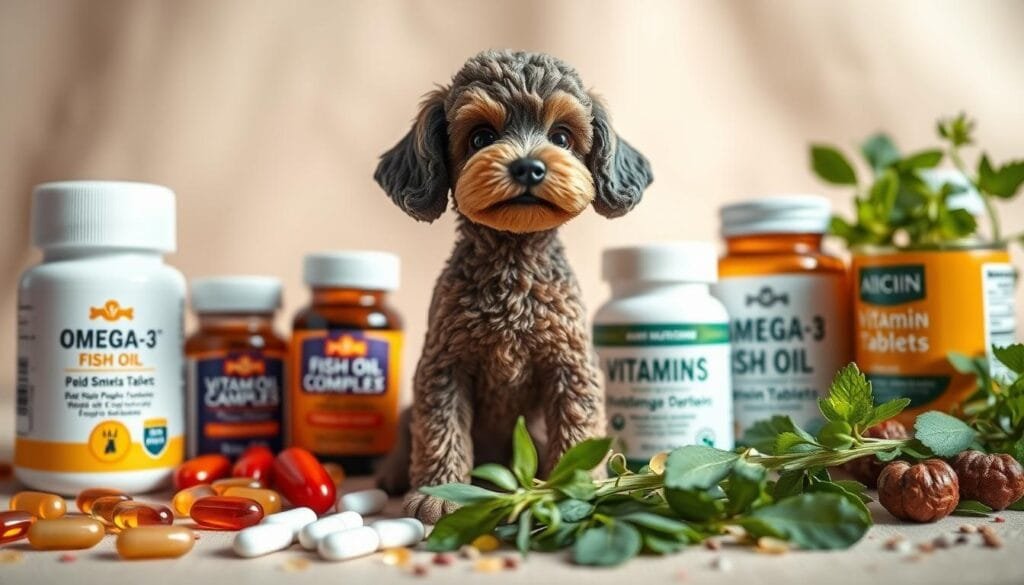
Minerals are also critical for small dogs. Calcium and phosphorus are needed for strong bones and teeth. Iron helps with healthy red blood cells and oxygen transport. Zinc supports the immune system, healing, and a healthy coat.
When picking food for your small dog, look for high-quality sources of these key nutrients. Good sources include:
- Vitamin A: Liver, sweet potatoes, carrots
- Vitamin E: Spinach, broccoli, eggs
- B Vitamins: Chicken, turkey, fish, whole grains
- Calcium: Dairy products, fish with soft bones, leafy greens
- Phosphorus: Meat, poultry, fish, eggs
- Iron: Red meats, organ meats, legumes
- Zinc: Beef, lamb, poultry, whole grains
By making sure your small dog gets the right mix of vitamins and minerals, you support their health and life span. Always talk to your vet to find the best food for your dog’s specific needs.
Age-Specific Dietary Needs
As your small breed dog grows, their diet needs change. It’s key to give them the right food for each stage. Life-stage nutrition is vital for their health and happiness.
Puppy Nutrition
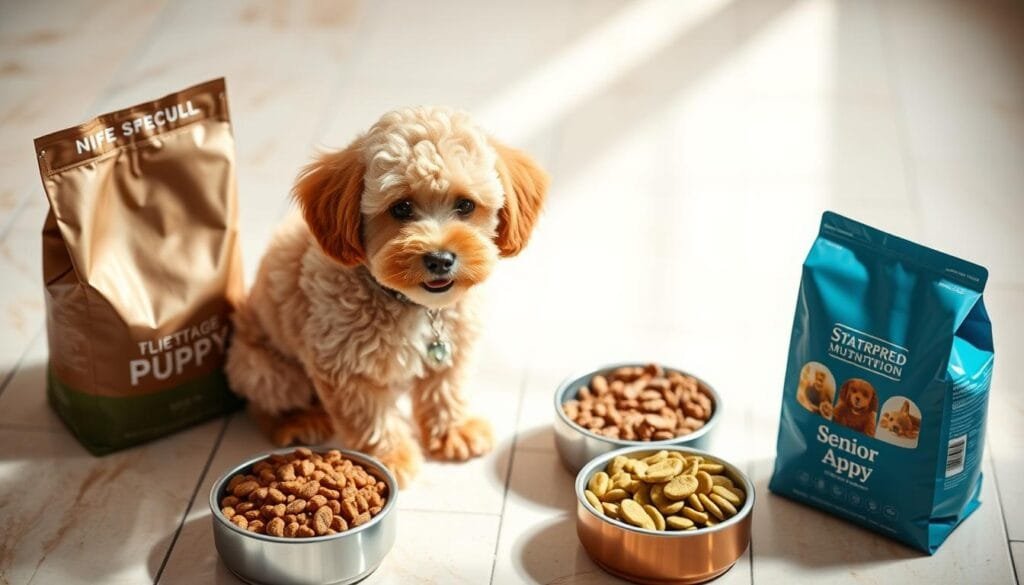
Puppies need a diet full of protein, fatty acids, and nutrients for fast growth. Choose puppy food made for small breeds. It has the right amount of calories and nutrients for puppy growth. Feed them three to four times a day.
Adult Dog Maintenance
Adult small breed dogs need food that helps them stay healthy and active. Their food should have the right mix of protein, fat, and carbs. This keeps them from getting too heavy. Watch their portions and body shape to avoid weight gain.
Senior Dog Considerations
Older small breed dogs move less and need less food. Their diet should help keep muscles strong, support joints, and improve overall health. Look for foods with fewer calories, added joint support, and easy-to-digest ingredients. Keeping an eye on your senior dog’s health and adjusting their diet is important for their comfort.
| Life Stage | Key Nutritional Needs | Feeding Frequency |
|---|---|---|
| Puppy | High-quality protein, essential fatty acids, balanced nutrients for growth | 3-4 times per day |
| Adult | Balanced protein, fat, and carbohydrates for maintaining healthy weight | 2 times per day |
| Senior | Reduced calories, joint support, easily digestible ingredients | 2 times per day or as recommended by veterinarian |
By giving your small breed dog the right food at each stage, they can live a long, happy life with you.
Wet vs. Dry Food Options
Choosing between wet and dry food for your small breed dog is important. You need to think about moisture content, dental health, and how tasty it is. Both types have good and bad points, so knowing these can help you decide what’s best for your dog.
Wet food has more moisture, which is good for dogs who don’t drink enough water. It helps with digestion and keeps the urinary tract healthy. But, it might not clean teeth as well as dry kibble does.

Dry food is easier to store and serve, and it’s often cheaper than wet food. Its crunchy texture helps clean teeth by removing plaque and tartar. But, some small dogs might not like it as much, which could make them eat less and miss out on nutrients.
When looking at wet and dry food, consider these points:
| Factor | Wet Food | Dry Food |
|---|---|---|
| Moisture content | High | Low |
| Dental health benefits | Low | High |
| Palatability | High | Varies |
| Convenience | Low | High |
| Cost | High | Low |
The right choice for your small breed dog depends on their needs and likes. Some owners mix wet and dry food to get the best of both worlds. Talk to your vet to find the best food for your dog.
Grain-Free and Limited Ingredient Diets
Grain-free and limited ingredient diets are popular for small breed dogs. They aim to solve health issues like food sensitivities and allergies. These diets use a few high-quality ingredients to help your dog stay healthy.

Benefits and Controversies
Supporters say these diets are closer to what dogs naturally eat. They remove common allergens to help with digestion and skin issues. But, not all dogs need these diets. Some experts worry that grains are important for nutrients and fiber.
When to Consider Specialty Diets
If your dog has food sensitivities or allergies, a grain-free diet might help. But, always talk to your vet first. They can make sure the diet is right for your dog’s needs.
How to Choose the Best Dog Foods for Small Breeds
Choosing the right food for your small breed dog is key for their health. With many options, picking the best can be tough. Focus on quality ingredients and get vet advice to ensure your dog gets the best nutrition.
Reading Labels and Ingredients
When picking dog food, read labels and ingredients lists carefully. Look for real meat or fish as the first ingredient. Stay away from fillers, by-products, and artificial additives. Make sure the food meets your dog’s nutritional needs.
- Protein content and sources
- Fat content and sources
- Carbohydrate sources
- Vitamin and mineral supplementation
- Calorie density
| Ingredient | Ideal Percentage |
|---|---|
| Protein | 25-30% |
| Fat | 15-20% |
| Carbohydrates | 30-40% |
Consulting with Your Veterinarian
Your vet is a great help in choosing your small breed dog’s food. Regular check-ups and talking about your dog’s diet are important. Your vet can give advice based on your dog’s age, weight, and health.
Your veterinarian is your best ally in ensuring your small breed dog receives optimal nutrition throughout their life stages.
Every dog is different, and their food needs can change. By working with your vet and choosing quality ingredients, your small breed dog can live a happy, healthy life.
Top Recommended Brands for Small Breed Dogs
Choosing the best dog food for your small breed is all about quality. Look for formulas made just for smaller dogs. Here are some top brands that offer both premium and budget-friendly options.
Premium Options
If you want the best for your small dog, check out these premium brands:
- Royal Canin Small Breed: This trusted brand offers specialized formulas for small dogs at various life stages, with precise nutrient blends and highly digestible proteins.
- Hill’s Science Diet Small Bites: Veterinarian-recommended, Hill’s provides balanced nutrition with easy-to-chew kibble size perfect for little mouths.
- Wellness Small Breed Complete Health: Made with high-quality proteins and whole foods, Wellness ensures your small dog gets the nutrition they need in a delicious, size-appropriate formula.
Budget-Friendly Alternatives
Looking for affordable options that are also high in quality? Check out these brands:
- Purina Pro Plan Small Breed: This budget-friendly brand offers a nutrient-dense formula with real meat as the first ingredient, providing the energy your small dog needs.
- Iams ProActive Health Small Breed: With high-quality protein and essential nutrients, Iams is an economical choice that doesn’t compromise on meeting your small dog’s dietary requirements.
- Blue Buffalo Life Protection Small Breed: This affordable brand features real meat, whole grains, and garden veggies in a formula designed for the higher energy needs of small breeds.
While cost is important, don’t forget the importance of quality. Look for recipes with premium proteins, essential fatty acids, and size-specific kibble. This will help your small dog thrive.
Homemade and Raw Food Diets for Small Dogs
Thinking about different ways to feed your small dog? You might look into homemade dog food or raw feeding. These options are popular because they seem more natural and healthy for pets.
Homemade dog food lets you control what your pet eats. You can make sure they get the best nutrition for their needs. But, it’s important to work with a vet to make sure the food is balanced.
Raw feeding, or the BARF diet, gives your dog uncooked meat, bones, and organs. Fans say it’s like what wild dogs eat. It might help with digestion and make their skin, coat, and teeth stronger. But, there are risks like bacteria and making sure the food is balanced.
Thinking about homemade or raw food for your small dog? Do your homework and talk to your vet. They can help you decide if it’s right for your pet. Always change their diet slowly to avoid stomach problems.
Alternative diets can be good for some small dogs. But, be careful and get expert advice. Making sure your pet gets the right nutrients is key, no matter the diet.
Common Health Issues and Dietary Solutions
As a small dog owner, knowing about small dog health concerns is key. Issues like dental health and digestive sensitivities can be diet-related. The right dog food can support your pet’s health.
Dental Health
Small breeds face dental problems like tartar buildup and gum disease. Their smaller mouths and crowded teeth make them more prone. To help, choose dog foods with crunchy kibble or dental chews.
These can cut down on plaque and tartar. Look for foods with calcium, phosphorus, vitamin C, and parsley. These nutrients strengthen teeth and gums, keeping your dog’s smile bright.
Digestive Sensitivities
Small breeds often have sensitive stomachs. This can cause discomfort, diarrhea, or vomiting. For better digestion, pick dog foods with:
- High-quality, easy-to-digest proteins
- Prebiotic fibers for good gut bacteria
- Omega-3 fatty acids to fight inflammation
- Limited ingredients to avoid allergens
Choosing the right dog food can help your small breed’s digestive health. It keeps them comfortable and avoids digestive issues.
FAQ
Q: What is the best food for small dogs?
A: The best food for small dogs is one that is specifically formulated for their unique needs. Look for small-breed dog food that contains high-quality ingredients, is complete and balanced, and meets the nutritional requirements established by the AAFCO. This ensures your little pup gets the nutrients they need without unnecessary fillers!
Q: Should I choose dry dog food or wet dog food for my small dog?
A: It really depends on your dog’s preference and dietary needs! Dry dog food is great for maintaining dental health and is often more convenient, while wet dog food can be more palatable and hydrating. Mixing both can also be a win-win for those picky eaters!
Q: How can I find the right dog food for my small dog?
A: Finding the right food for your small dog involves looking for a dog food brand that prioritizes quality ingredients and meets AAFCO standards. Consider your dog’s age, size, and any specific dietary needs such as food allergies or sensitivities. Don’t hesitate to consult your veterinary for recommendations!
Q: Are there specific brands that offer the best dry dog food for small breeds?
A: Absolutely! There are several dog food brands that excel in creating small-breed dog food. Popular options often include brands like Royal Canin, Hill’s Science Diet, and Blue Buffalo. Always read reviews and check ingredient quality – your furry friend deserves the best!
Q: What should I look out for in small-breed senior dog food?
A: When selecting small-breed senior dog food, focus on diets that are lower in calories to help combat dog obesity, packed with joint-supporting nutrients like glucosamine, and rich in antioxidants for overall health. Remember, senior dogs require special care just like us older folks!
Q: Can dog food allergies affect my small dog’s diet?
A: Yes, food allergies can significantly impact your small dog’s diet. Symptoms like itching, digestive upset, or ear infections might mean it’s time to reevaluate their food. Consult your vet for a prescription diet or hypoallergenic dog food that can cater to their specific needs without compromising on taste!
Q: How do I ensure my small dog is eating a complete and balanced diet?
A: To ensure your little buddy is eating a complete and balanced diet, choose commercial dog food that meets AAFCO standards. This guarantees that the food contains all the necessary nutrients for dogs, like proteins, fats, carbohydrates, vitamins, and minerals. Keep an eye on ingredient quality too – they shouldn’t be munching on mystery meat!
Q: Are there any foods I should avoid for my small dog?
A: Definitely! Avoid foods that contain artificial preservatives, fillers, or by-products. Also, be mindful of human food that’s toxic to dogs, such as chocolate, grapes, and onions. Stick to high-quality pet food that’s specifically designed for small dogs and you’ll be on the right track!
Q: What are the consequences of feeding my small dog low-quality pet food?
A: Feeding your small dog low-quality pet food can lead to various health issues including obesity, poor coat quality, and even digestive problems. Remember, you wouldn’t settle for junk food, so why should your pup? Choose quality food that supports their health and happiness!
Conclusion
Choosing the right dog food for small breeds is key to their health. They need foods rich in nutrients and high-quality proteins. It’s also important to watch their calorie intake and portion sizes to keep them at a healthy weight.
Age-specific diets are vital for each stage of a small dog’s life. This includes puppy, adult, and senior stages. Each diet is designed to meet the specific needs of that life stage.
When picking the best food for your small breed dog, look at the ingredients and nutritional balance. Also, consider any health issues your dog might have. Reading labels and talking to your vet can help you make informed choices for your dog’s needs.
Every dog is different, so what works for one might not work for another. By understanding your small breed’s needs and working with your vet, you can create a diet plan that supports their health. This way, your small breed friend can live a long, happy, and healthy life.