
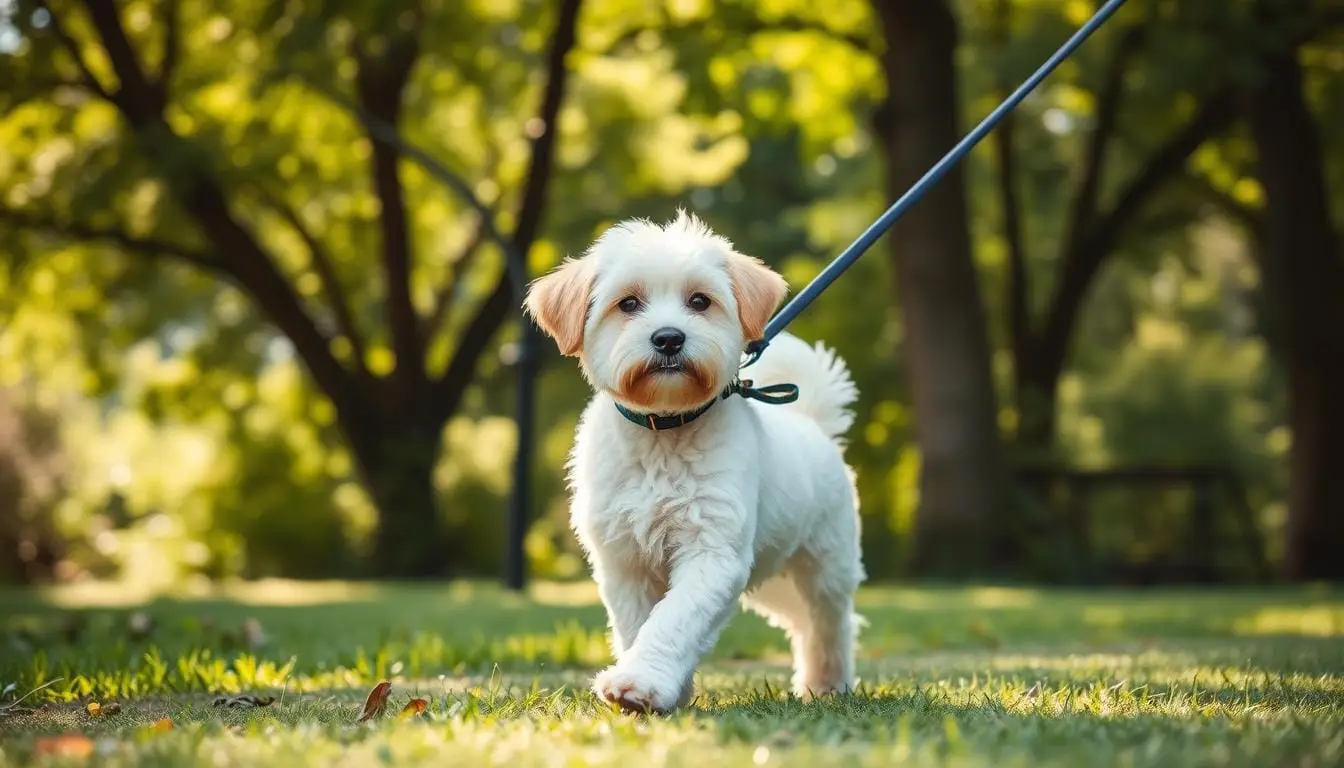
Did you know over 40% of small dog owners face challenges with leash walking? Leash walking is key for small breeds that often pull, lunge, or show fear. It’s essential to learn how to train your dog to walk calmly. By achieving this, you can make walks enjoyable with your small pup and strengthen your bond.
Training your small dog to walk calmly on a leash needs patience, consistency, and the right methods. It’s important to understand your dog’s leash walking behavior and find out why they might be pulling or showing fear. With the right gear, positive reinforcement, and a steady training plan, you can make your dog’s leash walks calm and peaceful.
Key Takeaways
- Identify common leash walking issues in small dogs and their root causes
- Select the right leash, harness, or collar for your small dog’s comfort and safety
- Establish a consistent training routine with short, engaging sessions
- Use positive reinforcement techniques to reward good leash walking behavior
- Gradually introduce distractions and progress to different environments
In this article, we’ll explore how to train your small dog for calm leash walking. We’ll cover choosing the right equipment, using positive reinforcement, teaching basic commands, and solving common problems. By the end, you’ll know how to make leash walks a fun experience for you and your small dog.
Understanding Your Small Dog’s Leash Walking Behavior
Small dogs often have unique behaviors on a leash. This can make walks tough for both the dog and the owner. Knowing these leash walking issues and why they happen helps you meet your dog’s needs. It also improves their obedience training.
Small dogs might pull, lunge, or bark a lot on walks. These problems can come from not enough training, being too excited, feeling anxious, or scared. Spotting what your small dog does on walks is the first step to fixing it.
Common Leash Walking Issues in Small Dogs
Some big problems for small dogs on a leash include:
- Pulling on the leash
- Lunging at other dogs or people
- Excessive barking or whining
- Refusing to move or lying down
- Zigzagging or darting around
These issues can make walks hard and not fun for you or your dog. But, with patience, consistency, and the right training, you can help your dog get better.
Identifying the Root Causes of Poor Leash Walking
To fix your small dog’s leash walking problems, find out why they act that way. Common reasons include:
| Cause | Description |
|---|---|
| Lack of training | Not enough or uneven training leads to bad leash manners |
| Excitement | Being too excited to explore or meet other dogs |
| Anxiety or fear | Being scared or anxious because of new things or places |
| Boredom | Not getting enough mental or physical activity |
Knowing why your small dog acts out on walks helps you train them better. You can focus on what they need to improve their small dog behavior on walks.
Choosing the Right Equipment for Training Your Small Dog
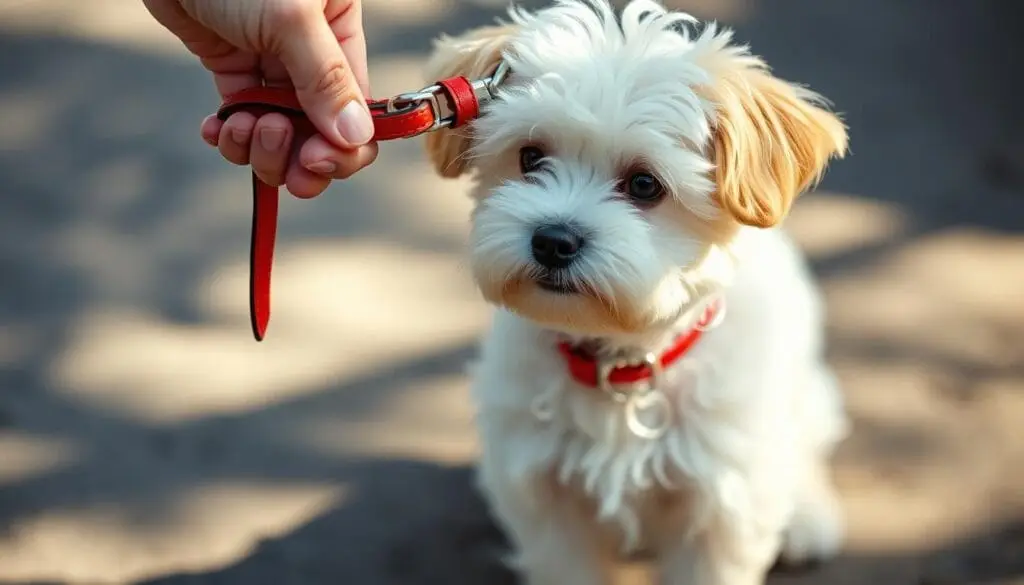
Choosing the right gear is key when training your small dog to walk calmly on a leash. The right leash, harness, or collar can greatly impact your training success and your dog’s comfort. Let’s look at the best equipment for small dogs and why a proper fit is so important.
Types of Leashes Suitable for Small Dogs
When picking a leash for your small dog, consider these options:
- Lightweight leashes: Pick a leash made of lightweight materials to avoid putting too much strain on your dog’s neck and back.
- Adjustable leashes: Adjustable leashes let you change the length to fit your training needs and your dog’s size.
- Retractable leashes: While they’re handy, retractable leashes aren’t good for training as they can lead to pulling and less control.
Selecting a Comfortable Harness or Collar
A comfy harness or collar is key for your small dog’s comfort during leash training. Here are some things to think about:
- Harnesses: Harnesses spread the pressure across the chest and shoulders, easing neck strain. They’re great for small dogs with tracheal collapse or breathing problems.
- Soft collars: Choose a soft, padded collar that won’t bother your dog’s neck skin. Stay away from choke chains or prong collars, as they can hurt and cause discomfort.
Importance of Proper Fit and Adjustment
Getting the right fit for your small dog’s harness or collar is vital for their comfort and safety. Here are some tips for the perfect fit:
- Measure your dog: Use a flexible measuring tape to find your dog’s neck and chest size, checking the manufacturer’s chart.
- Two-finger rule: When the harness or collar is on, you should be able to fit two fingers between it and your dog’s skin.
- Adjust regularly: As your small dog grows or their weight changes, check and adjust the fit of their harness or collar to keep them comfortable.
By choosing the right leash, harness, or collar and making sure they fit well, you’ll help your small dog succeed in leash walking training.
HOW TO TRAIN A SMALL DOG TO WALK CALMLY ON A LEASH
Teaching your small dog to walk calmly on a leash is key for a good dog owner. Positive reinforcement and regular training can make your dog a great walking buddy. Here’s how to succeed in training your dog:
- Begin with short, regular training sessions in places your dog knows well, like your backyard or living room.
- Choose a comfy harness or collar and a light leash that fits your dog’s size.
- Give treats and praise when your dog walks beside you. This encourages them to stay by your side.
- Teach simple commands like “heel” or “with me” to set clear expectations for walking on a leash.
- As your dog gets better, you can walk further and for longer periods.
Consistency and patience are crucial in training your small dog. Celebrate their achievements and reward them with treats or toys. With time, your dog will learn to enjoy calm walks.
To make leash walking more fun, add games and exercises to your routine. These activities keep your dog’s mind active and strengthen your bond. They also help your dog focus better during walks.
| Training Game | Benefits |
|---|---|
| Red Light, Green Light | Teaches impulse control and responsiveness to cues |
| Figure 8s | Improves coordination and helps maintain a loose leash |
| Treat Scatter | Encourages calm behavior and reduces pulling |
The goal is to make every walk a positive experience for both you and your dog. With consistency, patience, and plenty of rewards, you’ll be on your way to enjoying stress-free adventures together.
Learning to walk calmly on a leash improves your dog’s obedience and sets the stage for more advanced training later.
Establishing a Consistent Training Routine
To train your small dog to walk calmly on a leash, a consistent routine is key. Consistency is key for your dog to learn good leash walking habits. Regular, short, and engaging training sessions help a lot.
Setting Aside Regular Training Sessions
Choose specific times each day for leash training. It could be a few minutes in the morning or a dedicated evening session. A consistent schedule helps your dog know when it’s time to train.
Try to have two to three sessions a day. This lets your dog rest and process what they’ve learned.
Keeping Training Sessions Short and Engaging
Training small dogs works best with short sessions. Puppies and small breeds can’t focus for long. Keep each session between 5 to 10 minutes.
Use different treats, toys, and praise to reward your dog. This keeps them interested. Always end on a positive note, celebrating small successes.
With a consistent routine, your small dog will learn to enjoy walks. They’ll look forward to leash time, making walks better for both of you.
Using Positive Reinforcement Techniques
Positive reinforcement is a great way to train your small dog to walk calmly on a leash. By rewarding good dog behavior consistently, you encourage your dog to repeat the desired actions. This section will explore how to use positive reinforcement techniques, including the types of rewards and motivators that work well for small dogs and the importance of timing when giving rewards.
Rewarding Good Leash Walking Behavior
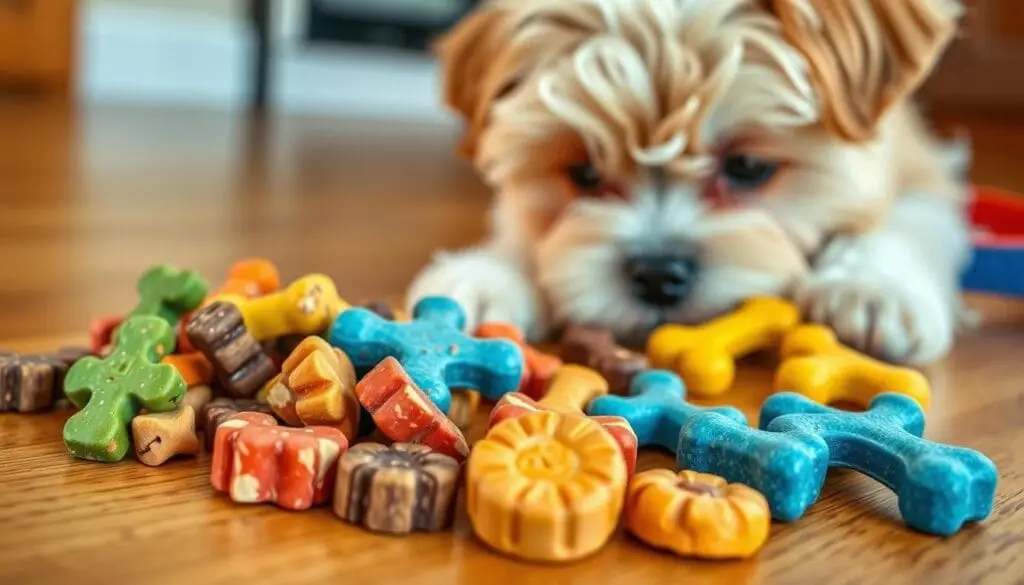
Whenever your small dog walks calmly on a leash, it’s important to reward them right away. This reinforces the connection between the desired action and the reward. It makes your dog more likely to repeat the behavior in the future. Rewards can include verbal praise, gentle petting, or offering a favorite toy or treat.
Types of Rewards and Motivators for Small Dogs
Choosing the right rewards for your small dog is crucial. They should capture their interest and excitement. Some popular rewards include:
- High-value dog treats that are small, soft, and easily consumed during walks
- Verbal praise and enthusiastic tone of voice
- Gentle petting or a brief play session with a favorite toy
- Access to a cherished activity or environment, such as sniffing a particular area or greeting a friendly person or dog
Timing and Frequency of Rewards
Timing rewards correctly is key to successful positive reinforcement training. Reward your small dog immediately after they display the desired behavior. This helps them associate the reward with the specific action you want to reinforce. As your dog becomes more consistent, you can gradually reduce the frequency of rewards while still keeping them motivated and focused.
Teaching Basic Obedience Commands for Leash Walking
To have calm and controlled leash walks, basic obedience commands are key. Teach your small dog commands like “heel,” “sit,” and “stay.” These commands help them know what’s expected during walks and encourage good behavior.
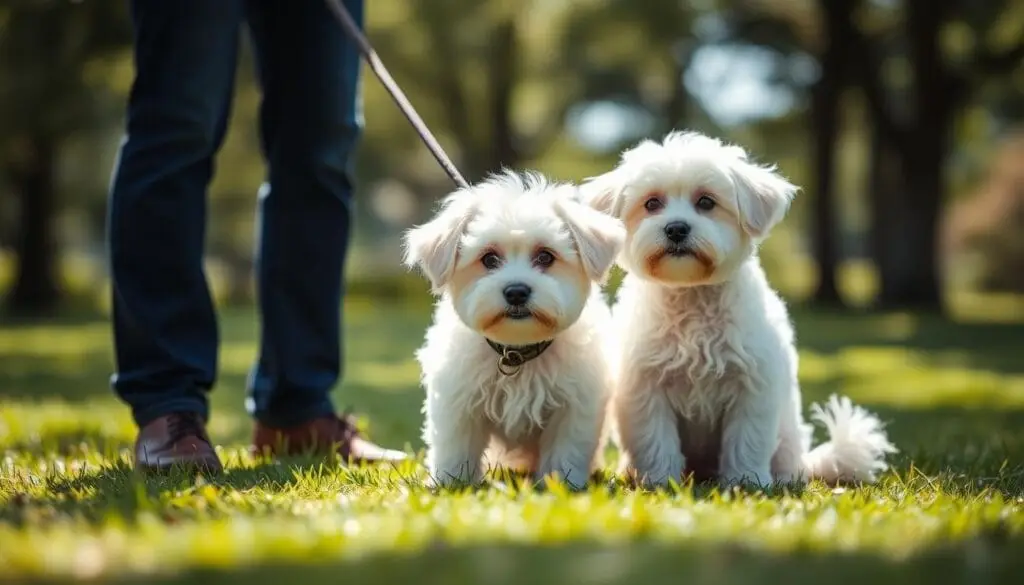
Begin with the “heel” or “with me” command. It teaches your dog to walk by your side. Start in a quiet place, like your backyard or living room. Hold a treat near your left side and say “heel” or “with me” cheerfully.
When your dog comes to your side, praise them and give the treat. Do this often until they learn the command well.
Then, teach the “sit” command. It’s useful when you need your dog to pause during walks. Hold a treat above their nose and slowly move it back, guiding their head up. Say “sit” when their bottom touches the ground and reward them.
Practice this in different places to make the behavior stronger.
Incorporating “Sit” and “Stay” Commands
After your dog learns “sit,” teach them “stay.” This command helps them stay calm and still, like when waiting to cross a street. Hold your palm out and say “stay” when your dog is sitting. Take a step back and reward them if they stay seated.
Gradually increase how far and long you step back before rewarding them.
As you get better at training, use these commands during walks. Use “heel” to keep them close, and ask them to “sit” and “stay” sometimes. Rewarding them for good behavior makes walks better for both you and your dog.
Dealing with Distractions and Obstacles
As you train your small dog to walk on a leash, it’s important to add distractions and obstacles slowly. This helps your dog stay focused and calm, even when things get tough. By slowly introducing different things to distract your dog, you build their confidence and strength.
Start with small distractions and then make them bigger. For example, you could have someone walk by at a distance while you’re training. As your dog gets better, you can make the distractions closer or add more people. Always reward your dog for staying focused on you and being calm.
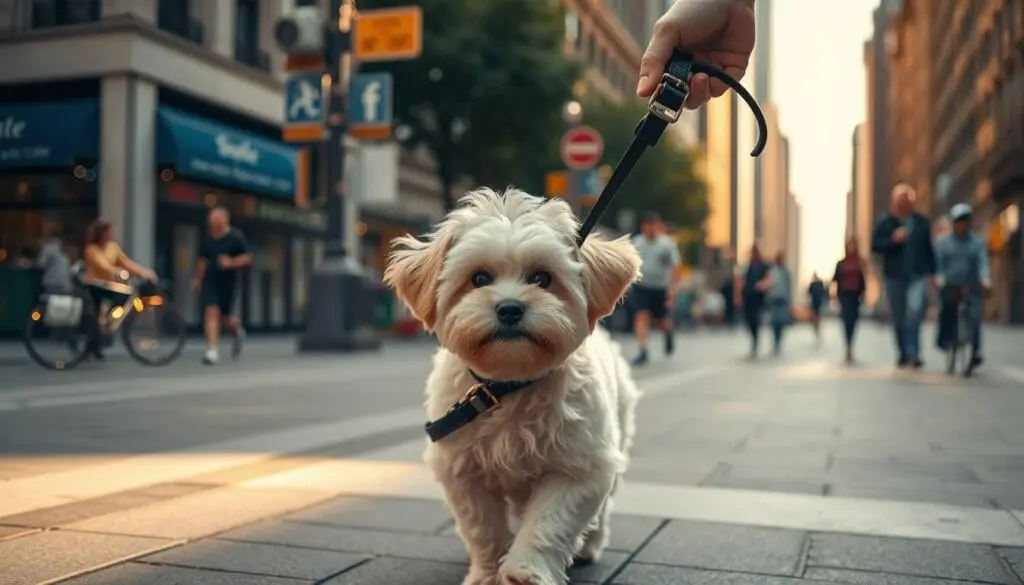
To teach your dog to handle obstacles, practice walking around things like benches or cars. Keep the leash loose and let your dog follow you. If they get distracted, use a treat or toy to guide them back. Being consistent and patient is key when teaching your dog to deal with distractions and obstacles.
Strategies for Maintaining Focus and Calm Behavior
Here are some ways to help your small dog stay focused and calm while walking on a leash:
- Use high-value treats or toys to reward your dog for staying focused on you.
- Practice the “watch me” command to encourage eye contact and attention.
- Engage in short, frequent training sessions to keep your dog mentally stimulated.
- If your dog becomes overwhelmed, create distance between them and the distraction.
Another good tool is the “leave it” command. Start by placing a treat on the ground and covering it with your hand. When your dog loses interest, give them a different treat. As you get better, make it harder by uncovering the treat and rewarding your dog for ignoring it. With practice, your dog will learn to walk calmly on a leash, even with tempting distractions.
| Distraction Level | Training Strategy |
|---|---|
| Low | Distant people or objects |
| Medium | Closer proximity, more movement |
| High | Multiple distractions, complex environment |
By slowly adding distractions and obstacles, and using positive reinforcement, you can teach your small dog to stay focused and calm while walking on a leash.
Progressing to Different Environments and Situations
When your small dog gets good at walking on a leash in a quiet place, it’s time for new challenges. You want them to be calm and confident in many places. This helps them become a great walking buddy.
Start by taking them to quiet streets or less busy parks. Let them sniff and explore while keeping the leash loose. As they get used to it, add more distractions and activity. Always praise them for staying calm and focused.
When you go to busier spots like downtown or crowded parks, be patient. If your dog gets anxious, slow down. Use commands like “heel” or “sit” to keep them calm.
Mix up your walks to keep your dog interested. Try different paths, like grass or concrete, and different weather. Visiting new places helps them learn and enjoy walking with you.
Training a small dog takes time, patience, and positive feedback. By slowly introducing new places and situations, you’ll raise a confident and happy walking partner.
Troubleshooting Common Leash Walking Problems
Training your small dog to walk calmly on a leash can be tough. But with patience and consistency, you can overcome these challenges. This way, you and your furry friend can enjoy pleasant walks together.
Dealing with Pulling and Lunging
If your small dog pulls or lunges on the leash, act fast. Stop walking and stand still when they pull. Wait until the leash is slack before moving again. This teaches them pulling won’t get them where they want to go.
Consistently reward calm walking with treats and praise. This reinforces the good behavior. Remember, loose leash walking takes time and practice. Be patient and celebrate small victories.
Addressing Excessive Barking or Excitement
Some small dogs bark too much or get too excited during walks. Teach them a “quiet” command. Say “quiet” calmly when they bark, and give them a treat when they stop. Gradually increase the time they need to be quiet before rewarding.
If your dog gets excited by other dogs or people, desensitize and countercondition them. Start by exposing them to the trigger at a distance where they stay calm. Reward them for good behavior. Slowly decrease the distance, always keeping them below their excitement threshold.
Managing Fearful or Anxious Behaviors
For small dogs with fear or anxiety, create positive associations and build confidence. Start walks in quiet, low-traffic areas and gradually move to busier places. Use high-value treats and praise to encourage them and make them feel secure.
“Be your dog’s advocate and protector. If they show signs of discomfort, give them space and time to adjust. Never force them into situations they’re not ready for.”
If your small dog’s fear or anxiety doesn’t improve, consider a professional dog trainer. They can offer tailored guidance and support.
Maintaining and Reinforcing Calm Leash Walking Habits
Once your small dog learns to walk calmly on a leash, it’s crucial to keep up the good work. Regular practice and consistency are key. This ensures your dog stays calm and walks by your side, even as you increase the walk’s length and distance.
Incorporating Regular Practice Sessions
To keep your small dog’s leash walking skills sharp, make regular practice a part of your daily routine. Set aside time each day to reinforce what your dog has learned. Even short, frequent practice sessions can greatly improve your dog’s behavior.
During these sessions, focus on rewarding your dog for walking calmly. Practice basic commands like “heel,” “sit,” and “stay.” Also, introduce new distractions and environments to test your dog’s focus.
Gradually Increasing Walk Duration and Distance
As your small dog becomes more confident, start making your walks longer and farther. This helps your dog build stamina and shows them that good behavior is expected, no matter the walk’s length or location.
When you increase the walk’s length and distance, remember these tips:
- Begin with short walks and add a few minutes each week.
- Vary your walking routes to expose your dog to new sights, sounds, and smells.
- Watch your dog’s energy levels and adjust the walk’s length accordingly.
- Always end walks positively, rewarding your dog for good behavior.
By sticking to regular practice and gradually increasing walk lengths, you’ll help your small dog develop lasting calm leash walking habits. Remember, consistency, patience, and positive reinforcement are key to training your furry friend for the long term.
FAQ
Q: How can I teach my puppy to walk on a leash without pulling?
A: Ah, the age-old question! To teach your dog to walk calmly on a leash, you need to start with short periods of practice. Begin around the house where there are fewer distractions, and gradually increase the difficulty by walking where there are lots of distractions.
Q: What’s the first step to train my dog to walk without pulling?
A: The first step is to get started with a proper collar and leash! Make sure you have something that’s comfortable for your pup. Then, practice walking in a straight line and reward him with treats whenever he walks without pulling.
Q: Should I walk in the opposite direction when my dog starts to pull?
A: Absolutely! If your pup starts to pull, turn and walk in the opposite direction. This will help teach your dog that pulling means they won’t get to go where they want. Remember, you’re the captain of this ship!
Q: How long should I practice walking my dog without pulling?
A: Keep it short and sweet! Start with just a few minutes at a time, and gradually increase to longer walks as your dog gets the hang of it. Consistency is key, and who doesn’t love a good stroll?
Q: How do I reward my dog when he walks nicely beside me?
A: Whenever your dog walks calmly at the end of the leash, praise him and give him a treat! You might say something like “good boy!” or “let’s go!” to reinforce that this behavior is what you want. Dogs love a good pep talk!
Q: Can I train my dog to walk without pulling at any age?
A: Yes, you can! While it’s easier to teach your dog when they’re a puppy, older dogs can learn too with lots of encouragement and patience. Remember, it’s never too late for your pup to become a leash-walking superstar!
Q: Why is it important to teach my dog to walk calmly on a leash?
A: Teaching your dog to walk calmly on a leash helps reduce unwanted behavior and makes going for a walk a much more enjoyable experience for both of you. Plus, it keeps you safe and avoids those awkward moments when your dog decides to chase a squirrel!
Q: What should I do if my dog gets distracted while walking?
A: If your dog gets distracted, try to regain his attention by calling his name or using a toy. If all else fails, just walk in the opposite direction until he refocuses. Remember, you’re the star of this show!
Q: How can I keep my dog focused while walking?
A: Keeping your dog focused requires practice! Use treats to reward him for paying attention and walking beside you. Mixing in lots of fun and praise will help your dog learn that walking nicely is super rewarding.
Conclusion
Training your small dog to walk calmly on a leash is a journey. It takes time, patience, and consistency. But the joy it brings is priceless. By understanding your dog’s behavior and using positive reinforcement, you can make walks fun for both of you.
Start with a routine and gradually add distractions. This will help your dog learn to handle new situations. If problems come up, don’t worry. Just adjust your approach and keep moving forward.
Every step towards calm walking is a victory. It strengthens your bond and improves your dog’s happiness. Enjoy the time you spend together, no matter what.
By following the tips in this article, you’ll see big changes in your dog’s behavior. Remember, every dog is different. Be patient and tailor your training to fit your dog’s personality.
With persistence and positive reinforcement, you’ll soon have a dog that walks calmly by your side. Enjoy the journey and the quality time you share during your walks.