
Did you know 40% of small breed dog owners think about switching to raw food? The debate on raw feeding for small dogs is growing. We’ll look into the good and bad sides of raw dog food to help you decide what’s best for your small dog.
We’ll dive into the world of raw dog food. We’ll talk about its benefits and risks, including digestion, skin health, and energy. We’ll also cover concerns about bacteria and nutrition. This will help you understand the pros and cons of a raw diet for your small dog.
Key Takeaways
- Raw feeding has gained popularity among small breed dog owners seeking alternative dietary options
- Potential benefits of a raw diet for small dogs include improved digestion, healthier skin and coat, and increased energy
- Risks associated with raw feeding include bacterial contamination and nutritional imbalances
- Transitioning to a raw diet requires careful planning and consideration of your small dog’s specific needs
- Consulting with your veterinarian is critical when deciding if a raw diet is right for your small dog
Understanding Raw Feeding for Small Dogs
Raw feeding is becoming more popular among pet owners. They want to give their small dogs a diet that’s more natural. This diet is similar to what their ancestors ate in the wild.
What is Raw Feeding?
Raw feeding, or the BARF (Biologically Appropriate Raw Food) diet, focuses on raw meat, bones, and organs. It also includes fruits and vegetables sometimes. This diet aims to be like what wolves and wild dogs eat, seen as healthier than commercial pet food.
Proponents of raw feeding say it offers many benefits. These include better digestion, healthier skin and coat, stronger teeth and bones, and more energy. By choosing a raw diet, you give your small dog a diet that’s closer to their natural diet and more nutritious than kibble or canned food.
How Raw Feeding Differs from Traditional Dog Food
The main difference is in ingredients and processing. Traditional small dog pet food is often cooked with grains, byproducts, and synthetic vitamins. Raw diets, on the other hand, use uncooked, whole foods that are processed less.
Raw diets also have a different nutritional profile. They are higher in protein and fat, with fewer carbs. This is closer to what dogs naturally eat, as they are meat-eaters.
“The goal of raw feeding is to provide your small dog with a diet that is as close to their natural, ancestral diet as possible, while ensuring that all of their nutritional needs are met.”
If you’re thinking about a raw diet for your small dog, research is key. Also, talk to a vet who knows about raw feeding. This ensures your dog gets a balanced diet that meets their specific needs.
Benefits of Raw Feeding for Small Dogs
Raw feeding can greatly benefit small dogs, improving their health and happiness. It gives them a diet that’s similar to what their ancestors ate. This helps support their nutrition and energy.

Improved Digestion and Nutrient Absorption
One key benefit of raw dog food is better digestion. The high moisture and natural enzymes in raw food help break down food well. This leads to better nutrient absorption. Small dogs, with their smaller digestive systems, need nutrients that are easy to digest for their health.
Healthier Skin and Coat
A diet rich in omega-3 and omega-6 fatty acids can greatly improve a small dog’s skin and coat. These nutrients keep the skin hydrated, reduce inflammation, and make the coat shiny. Many owners see a big change in their dog’s skin and coat after switching to raw food.
“After transitioning my Yorkie to a small breed raw diet, I noticed a remarkable difference in his coat. It became softer, shinier, and healthier-looking overall.” – Sarah, small dog owner
Increased Energy Levels
Raw dog food provides a balanced mix of proteins, fats, and nutrients that boost energy in small dogs. It avoids fillers and artificial additives found in many commercial dog foods. This allows small breeds to get energy from natural ingredients, leading to more vitality and well-being.
Switching your small dog to a raw diet can lead to better digestion, skin and coat health, and more energy. But, it’s important to talk to your vet first. They can make sure your dog gets the right nutrients and discuss any risks of raw feeding.
Potential Risks of Raw Feeding for Small Dogs
Raw feeding can be good for small dogs, but there are risks. Bacterial contamination and nutritional imbalances are two big concerns.
Bacterial Contamination Concerns
Feeding raw meat to small dogs can lead to bacterial contamination. Bacteria like Salmonella, E. coli, and Listeria can cause serious health problems. Small dogs are more at risk because of their size and sensitive digestive systems.
To avoid bacterial contamination, follow strict hygiene when handling raw food. This includes:
- Thoroughly washing your hands before and after handling raw meat
- Cleaning and sanitizing all surfaces and utensils that come into contact with raw food
- Storing raw meat separately from other foods in the refrigerator or freezer
- Discarding any uneaten raw food promptly to prevent bacterial growth
Nutritional Imbalances
Raw feeding can also lead to nutritional imbalances in small dogs. It’s hard to make sure their diet is balanced. If not planned well, they might miss out on important nutrients or get too much of something.
To keep your small dog’s diet balanced, consider the following:
| Nutrient | Importance | Sources |
|---|---|---|
| Protein | Supports muscle maintenance and growth | Lean meats, eggs, fish |
| Fats | Provides energy and essential fatty acids | Animal fats, fish oils, plant oils |
| Carbohydrates | Supplies energy and fiber | Fruits, vegetables |
| Vitamins and Minerals | Support various bodily functions | Organ meats, bones, supplements |
“Feeding a nutritionally balanced raw diet to small dogs requires careful planning and preparation to ensure all essential nutrients are provided in the right proportions.”
Getting help from a veterinary nutritionist can make sure your small dog’s raw diet is right. They can help avoid nutritional imbalances.
Nutritional Requirements for Small Dogs on a Raw Diet
When thinking about a raw diet for your small breed dog, knowing their nutritional needs is key. Raw dog food nutrition for small breeds must be balanced. This ensures they get the nutrients they need for health at every stage of life.
Small dogs burn energy faster than big dogs. So, they need more calories for their size. A small breed raw diet must be packed with nutrients and calories to keep them energized. Here’s a table showing the important nutrients and how much they should be in a raw diet for small dogs:
| Nutrient | Recommended Proportion |
|---|---|
| Protein | 30-40% |
| Fat | 15-25% |
| Carbohydrates | 5-10% |
| Vitamins and Minerals | 5-10% |
For raw diet for puppies, it’s important to give them the right mix of nutrients. Puppies need more protein and fat to grow fast and develop their brains.
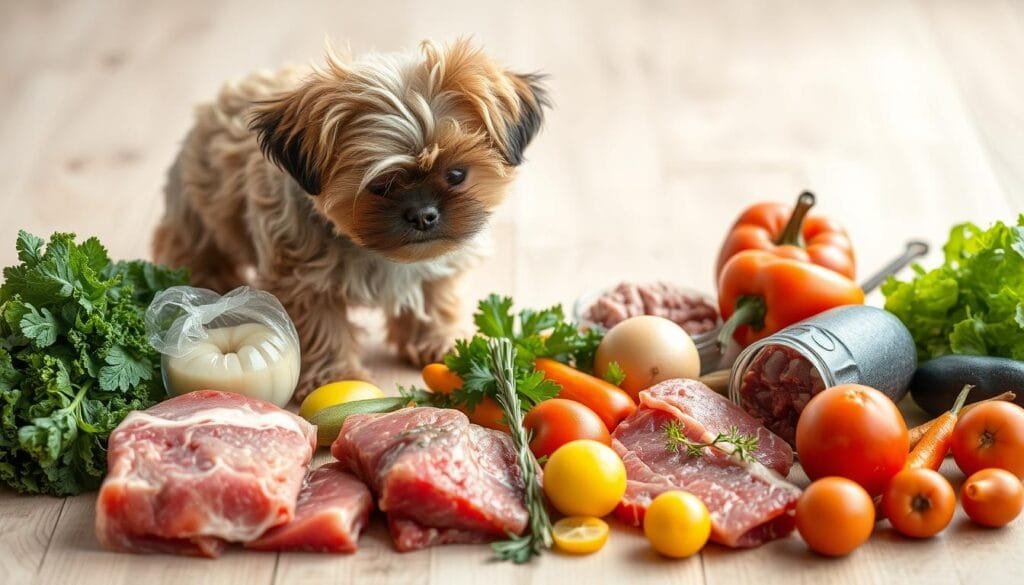
For raw diet for senior dogs, focus on keeping muscles strong and joints healthy. Senior dogs might need less protein and some supplements like glucosamine and chondroitin for their joints.
Feeding the right amount is critical for small dogs on a raw diet. Too much food can cause obesity, harming their joints and health.
To make sure your small dog gets the right nutrients, talk to a vet or pet nutritionist. They can help make a raw diet plan that fits your dog’s needs.
Choosing the Right Ingredients for Your Small Dog’s Raw Diet
When you’re making a raw diet for your small dog, picking the right ingredients is key. You want to make sure they get a balanced and nutritious meal. The main parts of a raw diet should include high-quality raw meat, organ meats, bones, and fruits and vegetables.
Meat Sources
The main ingredient in your small dog’s raw diet should be raw meat. Choose lean cuts from sources like chicken, turkey, beef, lamb, or pork. These meats are rich in protein and amino acids, which help your pet grow and stay healthy.
When picking raw meat for your dog’s food, go for human-grade, fresh, and minimally processed options.
Organ Meats
Adding organ meats to your dog’s raw diet is vital. They are full of vitamins and minerals. Liver, heart, and kidney are good choices because they have vitamin A, B vitamins, iron, and copper.
But, remember to feed organ meats in moderation. They are rich in nutrients that can be harmful if eaten too much.
Bones
Raw bones are a key part of a raw diet for small dogs. They give calcium, phosphorus, and minerals for strong bones and teeth. Chewing on raw bones also helps keep your dog’s teeth clean and promotes dental health.
When picking bones for your pet’s raw food, choose the right size and type. Look for non-weight-bearing bones to avoid choking or tooth fractures.
“Raw bones not only provide essential nutrients but also offer mental stimulation and promote dental health for small dogs on a raw diet.”
Fruits and Vegetables
While meat should be the main part of your dog’s raw diet, adding fruits and vegetables is good too. They provide extra vitamins, minerals, and fiber. Some good options include:
- Leafy greens like spinach and kale
- Berries such as blueberries and strawberries
- Carrots and sweet potatoes for beta-carotene
- Apples and pears for fiber and antioxidants
When adding fruits and vegetables, start with small amounts and introduce them slowly. This helps avoid digestive upset. You can also puree or lightly steam them to make them easier for your dog to digest.
Preparing and Storing Raw Dog Food
Feeding your small dog a raw diet requires careful handling and portion control. These steps help avoid bacterial contamination and ensure a nutritious meal.
Safe Handling Practices
Raw meat can carry harmful bacteria. So, it’s vital to follow strict hygiene when preparing your dog’s food. Always wash your hands with soap and warm water before and after handling raw ingredients.
Use separate cutting boards, bowls, and utensils for raw meat and other ingredients. This prevents cross-contamination. Clean and disinfect all surfaces and tools that touch raw food regularly.
Store raw dog food in the refrigerator or freezer in airtight containers. Label them with the date and use the oldest first. Thaw frozen food in the fridge, not at room temperature, to stop bacterial growth. Use thawed food within 24-48 hours and discard leftovers.

Portion Control
Controlling portions is key to keeping your small dog healthy and preventing nutritional imbalances. The amount of raw food needed depends on your dog’s age, weight, activity level, and metabolism. Feed your small dog 2-3% of their ideal body weight daily, in two or more meals.
To ensure the right nutrients, follow this basic ratio when preparing raw meals:
| Ingredient | Percentage |
|---|---|
| Muscle meat | 70-80% |
| Organ meat | 10-15% |
| Bone | 10-15% |
| Fruits and vegetables | 5-10% |
Adjust portions as needed based on your dog’s individual needs and body condition. Regularly check your pet’s weight and consult with your vet to keep them healthy.
Proper food safety practices and portion control are essential components of a successful raw feeding plan for your small dog.
By following these guidelines, you can reduce risks from raw meat and give your dog a balanced, nutrient-rich diet.
Transitioning Your Small Dog to a Raw Diet
When you start your small breed dog on a raw diet, do it slowly. This helps avoid upset stomachs. It’s key for puppies and older dogs, as their stomachs are more sensitive.
Begin by adding a little raw food to their usual diet. Over 7-10 days, slowly add more raw food and less old food. Here’s a simple plan:
| Day | Raw Food | Old Food |
|---|---|---|
| 1-2 | 25% | 75% |
| 3-4 | 50% | 50% |
| 5-7 | 75% | 25% |
| 8-10 | 100% | 0% |
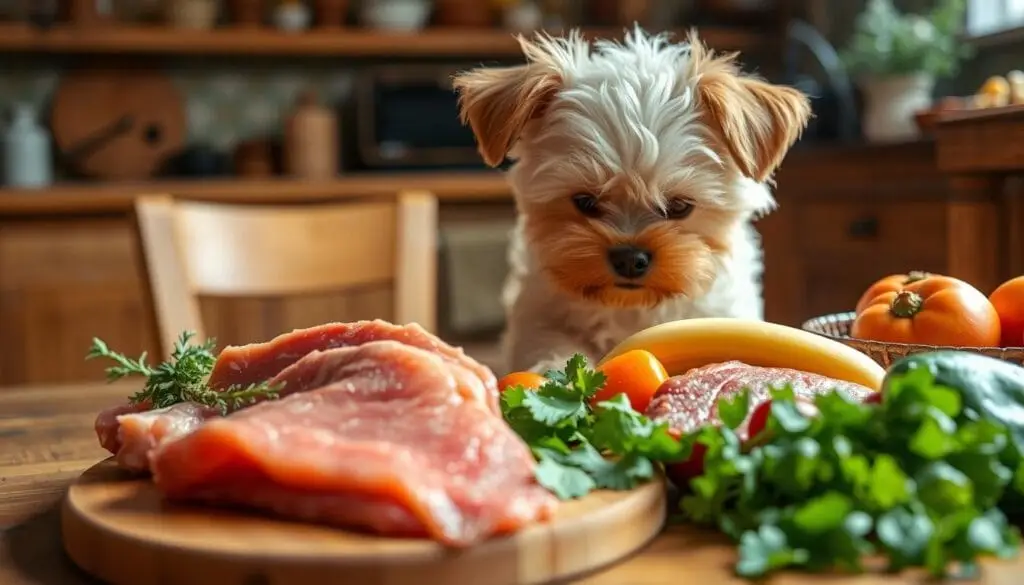
Watch your dog closely for any signs of upset stomach. If they show signs like vomiting or diarrhea, slow down the change. Some dogs might need more time, like those eating commercial food for a long time.
It’s important to make sure your dog’s raw diet is balanced. Puppies and older dogs need special nutrients for growth and health. Talk to a vet or a trusted raw food supplier to make sure their diet is right.
“Patience is key when transitioning your small dog to a raw diet. Every dog is different, and some may need more time to adjust. Be consistent, and don’t hesitate to seek professional guidance if needed.”
Changing to a raw diet needs patience, consistency, and attention to your dog’s needs. With these tips and your vet’s help, your dog can enjoy a healthy small breed raw diet.
The Pros and Cons of Raw Feeding for Small Dogs
Thinking about a raw diet for your small dog? It’s key to look at the good and bad sides. A raw diet might make your dog’s digestion better and give them more energy. But, it’s smart to talk to your vet first.
Weighing the Benefits and Risks
Raw feeding can be good for your small dog. It might make their teeth and coat healthier. They could also have better digestion and more energy.
- Better dental health
- Shinier coat and healthier skin
- Smaller, firmer stools
- Increased energy and vitality
But, there are downsides too. Raw meat can have bacteria. The diet might not have the right balance of nutrients. There’s also a risk of choking or blockages from bones.
- Bacterial contamination from raw meat
- Nutritional imbalances if the diet is not properly formulated
- Choking hazards or intestinal blockages from bones
- Higher cost and time commitment compared to commercial dog food
Here’s a quick look at the good and bad of raw feeding for small dogs:
| Pros | Cons |
|---|---|
| Improved digestion | Risk of bacterial contamination |
| Healthier skin and coat | Potential nutritional imbalances |
| Increased energy levels | Choking hazards from bones |
| Smaller, firmer stools | Higher cost and time commitment |
Consulting with Your Veterinarian
Before switching to raw food, talk to your vet. They can check if it’s right for your dog. They’ll look at your dog’s age, health, and lifestyle. Your vet can also guide you on making a balanced diet and keeping food safe.
“While raw feeding can offer benefits for some dogs, it’s not a one-size-fits-all solution. Always consult with your veterinarian to determine if a raw diet is appropriate for your small breed dog.”
Remember, choosing a raw diet for your small dog needs careful thought. Look at the benefits and risks. Also, think about your dog’s needs and if you can handle the time and cost.
Alternatives to Raw Feeding for Small Dogs
Raw feeding is popular, but it’s not for every small dog. There are other ways to feed your pet well. These options give your dog a balanced and nutritious diet.

High-Quality Commercial Dog Foods
Commercial small dog pet food is a good alternative. Many brands make food just for small breeds. These foods are tested well and meet quality standards.
When picking a pet food, look at these things:
- Ingredient quality
- Nutrient profile
- Brand reputation
- Specific health needs of your dog
“A high-quality commercial diet can provide all the essential nutrients your small dog needs to thrive.” – Dr. Sarah Jones, Veterinary Nutritionist
Homemade Cooked Dog Food
Homemade cooked meals are another choice. You can choose what goes into your dog’s food. But, it’s important to use recipes that are balanced for your dog’s needs.
Here’s a simple recipe for homemade dog food:
| Ingredient | Amount |
|---|---|
| Lean ground turkey | 1 pound |
| Cooked brown rice | 1 cup |
| Steamed vegetables (carrots, green beans) | 1 cup |
| Calcium supplement | As directed by veterinarian |
Always talk to your vet before starting homemade food. They can make sure it’s right for your dog.
FAQ
Q: What exactly is a raw food diet for dogs?
A: A raw food diet for dogs consists of uncooked meat, bones, fruits, and vegetables. It’s a diet that aims to mimic what your dog’s wild ancestors would have eaten. So, no more kibble; it’s time to channel your inner caveman!
Q: Are there any pros to feeding your dog raw food?
A: Absolutely! Many dog owners report that their pets have shinier coats, more energy, and healthier teeth on a raw dog food diet. Plus, you get to feel like a gourmet chef when preparing homemade raw food!
Q: What are the cons of a raw food diet for dogs?
A: The cons of raw dog food can include risks of bacteria and parasites, potential imbalances in nutrition if not properly managed, and a hassle for some pet owners who aren’t keen on handling raw meat. It’s not all sunshine and meaty bones!
Q: Is a raw food diet right for my dog?
A: The raw food diet may be good for dogs, but it’s not suitable for every canine. Some dogs may have specific dietary needs or health issues that make a raw food diet a no-go. Always consult with your vet before switching to a raw diet for your dog!
Q: Can dogs eat raw chicken?
A: Yes, dogs can eat raw chicken, but it’s essential to ensure that it’s fresh and sourced from a reliable supplier to minimize the risk of bacteria and parasites. Just make sure your dog isn’t planning a poultry heist from your kitchen!
Q: How do I transition my dog to a raw food diet?
A: Switching to a raw food diet should be done gradually. Start by mixing a small amount of raw food into your dog’s current diet and gradually increase the raw portion while decreasing the kibble. Think of it as a culinary adventure for your pooch!
Q: What should I include in a balanced raw food diet?
A: A balanced raw food diet for dogs should include raw meat, bones, organ meats, fruits, and vegetables. It’s all about variety—just like a doggy buffet! Make sure it’s properly balanced to meet your dog’s nutritional needs.
Q: Can I feed my dog raw eggs?
A: Yes, you can feed your dog raw eggs! They can be a great source of protein and healthy fats. Just make sure to source them from a reputable supplier to avoid any egg-citing bacteria issues!
Q: What if my dog refuses to eat raw food?
A: If your dog is turning its nose up at raw food, try warming it slightly or mixing in some of their favorite treats to entice them. If all else fails, you might need to rethink your raw feeding dogs strategy; not every dog is a fan of the raw food revolution!
Conclusion
Feeding your small dog right is key. Raw dog food can offer many benefits like better digestion and a shiny coat. But, it also comes with risks like bacterial contamination and nutritional imbalances.
Before switching to a raw diet, think it through. Consider your dog’s needs, the quality of ingredients, and the time needed for food preparation. Talking to your vet can help a lot.
The main goal is to keep your small dog healthy through good food. You can choose raw, high-quality commercial, or homemade cooked food. What’s most important is a balanced meal that fits your dog’s needs. With the right knowledge and vet advice, your dog can enjoy a happy, healthy life.